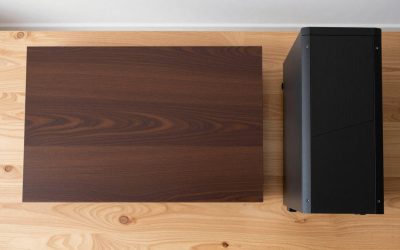
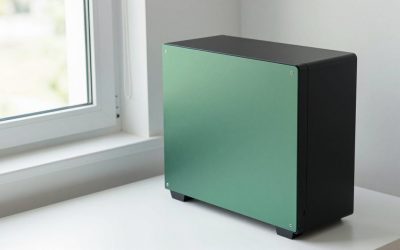
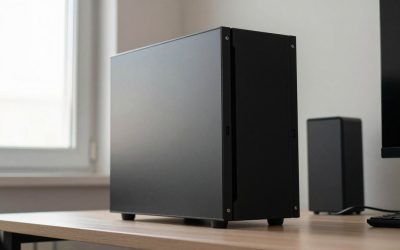
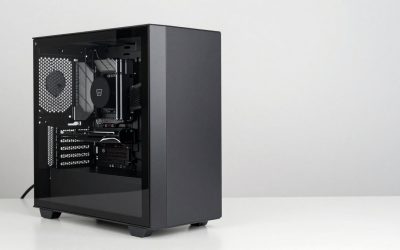
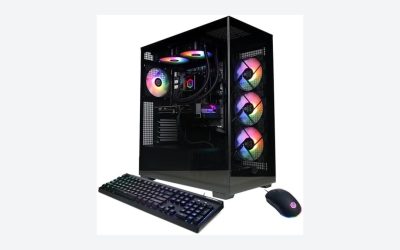
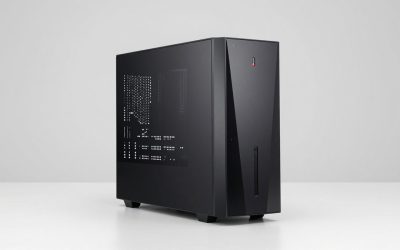
When designing a modern home office or multi-purpose living space, computer hardware is no longer hidden under a dark basement desk. Today’s high-performance tower PCs sit directly on solid wood desks, floating shelves, or dedicated side tables right in our primary living areas. As power consumption for modern desktop systems regularly reaches between 300W and 600W during intensive tasks, your computer operates essentially like a small space heater. Managing that heat—and the fan noise that comes with it—is a crucial home interior decision.
The central debate for home builders and home office decorators comes down to front panel architecture: a micro-mesh front panel versus a solid tempered glass panel designed with peripheral airflow channels. While tempered glass offers a sleek, aquarium-like view of internal lighting, mesh prioritizes unrestricted air intake. Choosing between them involves balancing cooling performance, acoustic comfort, dust accumulation, safety around children and pets, and how seamlessly the chassis integrates into your home’s aesthetic design.
As an Amazon Associate we earn from qualifying purchases at no extra cost to you.



Our Top Picks



Top 3 picks at a glance
Quick Verdict
For most home setups where low noise and thermal efficiency are top priorities, a mesh front panel is the superior choice. Direct airflow allows system fans to run at lower RPMs (revolutions per minute), resulting in a quieter room environment while keeping heat-sensitive components up to 5°C to 10°C cooler under heavy loads. However, if your desk is located in a high-dust area, a home with shedding pets, or if you prefer a clean, minimal, non-industrial aesthetic with subtle interior RGB lighting, an engineered tempered glass panel with side intake vents provides excellent dust suppression, acoustic isolation, and premium visual elegance.
Side by Side
| Feature | Mesh Front Panel | Tempered Glass (Airflow-Oriented) |
|---|---|---|
| Acoustic Comfort | Quieter fan sound profile due to reduced airflow resistance; fans spin slower. | Blocks direct internal whine, but fans must spin faster to pull air through side slits. |
| Thermal Efficiency | Maximum direct intake; ideal for high-wattage (400W–650W+) hardware. | Moderate to good intake depending on side channel depth (at least 1–1.5 inches wide). |
| Durability & Safety | Impact-resistant steel/aluminum mesh; completely shatterproof around kids and pets. | 4mm tempered safety glass; highly scratch-resistant but susceptible to impact shattering. |
| Maintenance & Cleaning | Requires frequent vacuuming or compressed air brushing of fine front mesh weave. | Easy smooth-surface micro-cloth wipe down; side filters trap dust internally. |
| Price Range | $50 to $160+ (e.g., budget steel mesh to premium natural wood trim options). | $50 to $180+ (budget mid-towers up to dual-chamber showcase chassis). |
| Space & Clearance Needed | Can sit closer to back walls; front needs clear forward space for intake. | Requires at least 2–3 inches of clear space on side intake flanks for adequate pull. |
| Interior Decor Style | Industrial, Scandinavian, warm natural materials (wood, matte metals). | Ultra-modern, minimalist, futuristic glass exhibit styling. |
| Resale & Versatility | High universal appeal for long-term cooling efficiency regardless of hardware evolution. | High appeal for buyers focused on custom RGB aesthetic display setups. |
| Best For | Quiet home offices, warm rooms, sustained heavy workloads, audio production. | Living room display, showpiece setups, environments with heavy pet shedding. |
Where Mesh Front Panel Wins
The fundamental advantage of a mesh front panel is unhindered breathability. In a typical home office setup, dual or triple 120mm or 140mm intake fans pull ambient air directly through thousands of microscopic perforations. Because there is virtually zero static pressure obstruction, fans don’t need to labor to pull air into the system chassis. A setup utilizing a high-airflow layout can comfortably maintain cool internal temperatures while keeping fan acoustic output under 30 dBA—a sound level comparable to a quiet whisper in a library.
From an interior design perspective, mesh panels have undergone a massive evolution. Modern furniture-grade designs elevate computer cases far beyond grey plastic boxes. For instance, options like the Fractal Design North (around $150) incorporate genuine walnut wood slats alongside open ventilation, blending warm organic textures with performance engineering. This allows a powerful machine to sit naturally alongside mid-century modern furniture, oak bookshelves, or neutral linen decor.
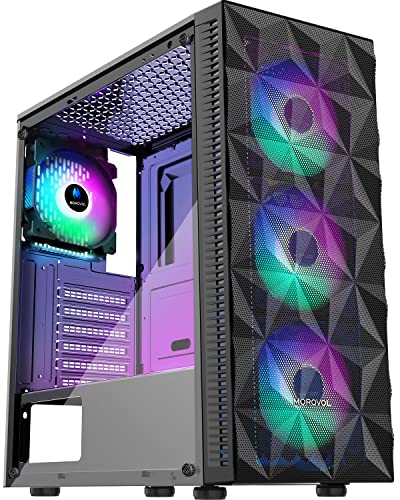
For budget-conscious builders who want top-tier cooling, functional mesh cases are accessible at lower price tiers. Chassis like the MOROVOL PC Case (around $49) or the Rosewill ATX Mid Tower Gaming Case (around $59) demonstrate how diamond-shaped mesh layouts deliver maximum airflow without requiring complex, expensive fan curves or water-cooling radiators to keep internal temperatures under control.
Where Tempered Glass for Airflow Wins
Tempered glass front panels dominate when visual presentation and crisp exterior maintenance take priority. A solid 4mm sheet of tempered glass acts as a polished barrier that conceals raw interior fan frames while providing an unobstructed view into your system’s interior lighting and components. In a modern living room or minimalist study, this creates an architectural, museum-case aesthetic that transforms computer hardware into ambient room lighting.
To address historical heating issues, modern glass front cases utilize recessed side-intake channels, bottom-up airflow chimneys, or angled pillar vents. Mid-tower chassis like the Lian Li V100-ATX (around $74) leverage intelligent internal chamber spacing to draw substantial intake air from offset vents while keeping the front glass seamless. This design prevents coil whine and electronic high-frequency sounds from traveling directly forward toward the user, reflecting acoustic energy backward into the chassis structure.
Maintenance is another area where glass shines in home environments. While micro-mesh front filters trap dust in their porous surfaces—requiring periodic vacuuming to prevent a gray, dusty appearance—tempered glass can be wiped clean in seconds with a soft microfiber cloth and standard glass cleaner. For homes with pets, the physical front barrier stops loose fur from sticking directly to the visible face of your PC.
Cost Over 5 Years
Evaluating the true cost of a PC chassis over a five-year ownership cycle requires looking beyond the initial retail price tag tag ($50 to $160+). The overall value proposition includes component longevity, replacement fan wear, and energy footprint.
- Initial Hardware Outlay: High-quality mesh cases and airflow-oriented tempered glass cases occupy similar price bands. Entry-level models hover around $50 to $75, while premium furniture-integrated designs reach $150 to $180.
- Fan Wear and Replacement: Mesh cases allow intake fans to operate comfortably at 40% to 50% duty cycles (approx. 600–800 RPM) to achieve optimal thermal balance. Glass front cases often require fans to run at 70% to 80% duty cycles (1100–1400 RPM) to overcome static pressure resistance from narrow side slits. Over 5 years, higher fan speeds can degrade fluid dynamic bearings faster, potentially requiring a $30 to $60 replacement set of 120mm PWM fans.
- Component Longevity: Operating graphics cards and central processors 5°C to 8°C cooler under direct mesh airflow reduces long-term thermal stress on power delivery capacitors and solder joints, helping protect your $800–$1,500 core hardware investment over multi-year lifespans.
Which One for Your Home
Small Apartment
In a compact studio or one-bedroom apartment, room volume is limited, meaning thermal energy quickly warms up small living spaces. A mesh front panel is recommended here because it maximizes thermal dissipation efficiency, letting your PC expels heat rapidly without pushing internal fans to maximum noise levels. This keeps both your computer and your living area cooler and quieter during work or entertainment hours.
Family with Kids or Pets
Houses with energetic toddlers or shedding pets present unique environmental challenges. An airflow-engineered tempered glass front panel is often the safer, cleaner solution. The solid front surface prevents small fingers or objects from poking through flexible mesh weaves, while pet hair slides off the glass surface rather than clogging direct micro-perforations. Just ensure the side panel glass is securely mounted with rubber-gasketed thumb screws to prevent accidental impact damage.
Rental Property
When living in a rental home where you cannot modify room acoustics or add wall-mounted acoustic panels, controlling noise at the source is vital. A high-efficiency mesh case paired with large 140mm intake fans allows you to run low-RPM fan curves that won’t vibrate through hollow rental desks or disturb housemates through shared walls late at night.
Long-Term Home
For dedicated home offices or custom-built homes looking forward into 2026 and beyond, balance architectural aesthetics with functional longevity. A hybrid approach—such as a front mesh panel finished with high-end architectural accents or premium real wood trim—delivers the ultimate synthesis. It provides lifetime thermal overhead for future hardware upgrades while anchoring your workspace with sophisticated, furniture-grade appeal.
FAQ
Does a mesh front panel collect more dust than tempered glass?
Mesh panels catch larger dust particles on their outer surface, making dust more instantly visible on the exterior face of the case. However, this actually prevents fine dust from penetrating deep into internal cooling fins. Tempered glass cases stay cleaner on the front surface, but fine dust still enters through side intake slots and accumulates on internal components over time.
Can a tempered glass case provide adequate cooling for a 500W+ gaming or workstation PC?
Yes, provided the case features well-engineered airflow pathways, such as side vents at least 1 inch wide, dual-chamber bottom intakes, or top-mounted liquid cooling radiators. However, expect system fans to run at higher RPM levels and generate slightly more noise compared to an open mesh design under heavy 500W+ thermal loads.
Are tempered glass front panels prone to shattering in a home environment?
Modern PC cases use 3mm to 4mm thick tempered safety glass designed to withstand normal handling and minor bumps. However, tempered glass is vulnerable to sharp impacts on its outer edges or contact with hard tile flooring. If your desk sits on ceramic tile, take extra care during cleaning and assembly, or choose a shatterproof metal mesh case.
How does front panel choice affect fan noise levels in a living room setup?
Front panel material impacts sound in two ways: obstruction noise and sound deflection. Glass blocks direct noise from internal mechanical components like pumps or coil whine, but creates air turbulence noise if fan blades sit too close to restricted intake slits. Mesh creates zero air turbulence noise and allows fans to run much slower, resulting in a deeper, less noticeable acoustic hum across a room.
Related guides
- Best Gaming PC for Overwatch 2: Ten Prebuilts Matched to Your Monitor (2026)
- Best Gaming PC for Baldur’s Gate 3: Matching CPU, VRAM and Storage to the Game (2026)
- Best Gaming PC for Apex Legends: Which Listings Fit a High-Refresh Setup (2026)
- Best RTX 3060 Gaming PCs: Eight Prebuilt Listings Compared by CPU, RAM and Cooling (2026)