
As an Amazon Associate we earn from qualifying purchases at no extra cost to you.




For years, the “hard drive or solid state drive?” question was simple: HDDs were cheap, SSDs were fast, and you picked based on budget. Today the calculus has changed. Games routinely ship 100 GB or larger, load screens punish slow storage, and SSD prices have dropped enough that a fast 2 TB drive costs less than many graphics cards. Yet hard drives still offer jaw-dropping cost per terabyte, which keeps them relevant for bulk storage. If you’re building or upgrading a gaming PC for your home, here’s how the two technologies actually compare on load times, longevity, cost, and day-to-day practicality.
Our Top Picks



Top 3 picks at a glance
Quick Verdict
For your gaming PC’s boot drive and game library, buy an SSD — specifically an NVMe M.2 drive if your motherboard supports one. Load times improve dramatically, often cutting waits from 40–60 seconds on an HDD to 10–15 seconds on a SATA SSD, with modern PCIe 4.0 NVMe drives shaving off a few more seconds on top. Keep a hard drive in the picture only as secondary storage for media, backups, and older games you don’t play often. If you can only afford one drive, make it a 1–2 TB SSD and expand later.
Side by Side
| Category | SSD (2.5″ SATA or M.2 NVMe) | HDD (3.5″ desktop) |
|---|---|---|
| Typical sequential speed | SATA: ~550 MB/s; NVMe: 3,500–7,450 MB/s | ~150–250 MB/s |
| Game load times | 10–20 seconds typical; near-instant texture streaming | 30–90 seconds on large modern titles |
| Noise | Silent, no moving parts | Audible hum and clicking; 20–30 dB typical |
| Durability | No moving parts; survives bumps well | Vulnerable to shock while spinning |
| Price per TB (internal) | Roughly $60–100 per TB | Roughly $15–25 per TB |
| Power draw | 2–8 W typical | 6–10 W idle, up to 25 W during spin-up |
| Space needed | M.2 sticks onto the board; 2.5″ drives are 7 mm thick | 3.5″ bay, about 5.8″ x 4″ x 1″ |
| Maintenance | None; just keep firmware current | Defragmentation and SMART health checks recommended |
| Resale value | Holds value better; older SSDs remain useful | Depreciates quickly as capacity becomes cheap |
| Best for | OS, games, and apps on any gaming PC | Bulk media storage and backups on a desktop |
Where Ssd Wins
Load times are the headline, and they’re not close. Reading a game’s assets from a drive rated at 7,000+ MB/s — as PCIe 4.0 NVMe drives like the Samsung 990 PRO are — takes a fraction of the time it does from a 5400 RPM hard drive that tops out around 180 MB/s. A game that takes over a minute to load from an HDD will often load in the low teens of seconds from an NVMe drive. Open-world games benefit the most, since they stream textures and geometry constantly; on an HDD you’ll see pop-in and stuttering that an SSD largely eliminates.
SSDs also transform the experience of booting your PC, launching apps, and installing patches. Windows feels instant. A 50 GB game update that crawled along at an HDD’s read/write speed flies by. And because SSDs generate no vibration or noise, your rig stays quiet — something you’ll appreciate if the PC lives in a living room or bedroom.
Physically, M.2 SSDs are the winner in any compact build. A 2280 stick measures just 80 x 22 mm and screws flat against the motherboard, needing no cables or drive bays. That matters in small-form-factor builds where a 3.5″ hard drive simply won’t fit. Drop resistance is a quiet bonus: with no spinning platters, an SSD tolerates the bumps and moves of household life far better than a mechanical drive.
Where Hdd Load Times for Gaming Pc Wins
To be blunt: on pure load times, the HDD never wins. What it wins at is everything around the edges. A 4 TB internal drive like the Seagate BarraCuda sells for roughly the price of a midrange 1 TB NVMe SSD. If your game library, video collection, and photo archive run into many terabytes, HDD storage costs a quarter to a fifth as much per gigabyte.
That makes an HDD genuinely useful as a secondary drive. Older games — the ones that loaded acceptably a decade ago — load acceptably from an HDD today. Competitive esports titles like CS2 or Rocket League are small and stream little data; the difference is barely noticeable. Put the three or four games you’re actively playing on the SSD and park the rest on bulk storage.
Hard drives also shine as backup targets. A drive that sits mostly idle, holding backups of your SSD, is exactly the workload mechanical drives were built for. They’re also easy to recover data from when they fail early: platters can often be read even when the controller dies, whereas a failed SSD controller can leave data effectively unrecoverable without expensive lab work.
Cost Over 5 Years
Assume a gaming PC buyer choosing between a 2 TB NVMe SSD and a 2 TB HDD, plus typical upgrade patterns:
– SSD route: A quality 2 TB PCIe 4.0 drive runs about $300–390 today. Expect it to last well beyond five years — most modern SSDs carry warranties of five years and endurance ratings measured in hundreds of terabytes written, far more than gaming workloads produce. Five-year cost: roughly $330–400, likely with no replacement.
– HDD route: A 4 TB desktop HDD costs $150–200. Realistic five-year drive survival is good but not guaranteed; mechanical drives average failure rates in the low single digits per year. Budget for possible replacement, and remember you may still want a small SSD for the OS and key games — adding one later costs more than buying it upfront.
– Hybrid route (what most buyers should do): A 1–2 TB NVMe SSD plus a 4 TB HDD totals roughly $500–580, covering fast gaming and cheap bulk storage in one purchase.
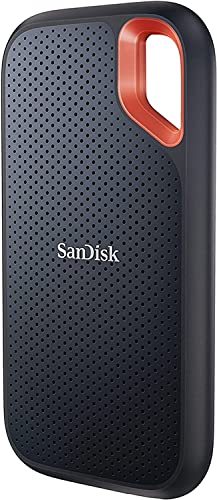
Note that external SSDs, like the SanDisk Extreme Portable at around 1,050 MB/s over USB-C, offer a middle path for gamers who shuttle libraries between a desktop and a laptop — slower than internal NVMe but several times faster than any HDD, with IP65-rated water and dust resistance for household rough handling.
Which One for Your Home
Small Apartment or Studio
Space and noise are at a premium, so go all-SSD. A single 2 TB M.2 drive takes zero drive bays, makes no sound, and generates minimal heat — helpful in a small room where your PC shares space with everything else. If your games and media overflow, add a bus-powered external SSD (many are smaller than a deck of cards and weigh under 50 grams) rather than a desktop HDD that needs its own power brick and shelf space.
Family with Kids or Pets
Durability and vibration matter here, and both favor SSDs for the primary drive — a tower on a carpeted floor with a toddler around means occasional knocks, and spinning platters don’t love being jostled while running. Use an SSD for everything the family actively uses, then add an HDD purely as a backup drive that lives powered-off on a high shelf. That gives you cheap, roomy backups with none of the mechanical risk in daily use.
Rental or Frequently Moved Home
If you relocate often, minimize moving parts. An all-SSD build is lighter, has fewer cables, and tolerates transit far better. This is also where a prebuilt system like the CyberPowerPC gaming PC makes sense — it arrives with an SSD configured and tested, and you can add an internal HDD or external SSD later without opening anything complicated. For renters who game on both a desktop and a laptop, a fast external SSD carries your library between machines.
Long-Term Family Home
With a permanent setup, the hybrid approach is the smart buy: a 2 TB NVMe SSD as your boot and games drive, plus a 4 TB internal HDD for media, game archives, and file history backups. In a stable home with a proper desk setup, an HDD’s noise and vibration are non-issues, and the cost savings on bulk storage are real. As prices on high-capacity SSDs continue easing into 2026, you can migrate that bulk storage to flash at your own pace.
FAQ
How much faster is an SSD than an HDD for gaming load times?
In practice, expect roughly 3–6x faster loads. A title that loads in 45–60 seconds from a 5400 RPM HDD typically loads in 12–18 seconds from a SATA SSD and a few seconds faster still from a PCIe 4.0 NVMe drive. Exact numbers vary by game engine; what’s consistent is that HDDs bottleneck asset streaming and SSDs don’t.
Does an SSD improve FPS, not just load times?
Mostly no — frame rates are driven by your CPU and GPU. Where an SSD helps is eliminating stutter and texture pop-in in games that stream assets from disk, and in keeping frame pacing smooth in dense open worlds. If your current rig stutters in big cities or fast travel, an SSD upgrade often fixes it even though average FPS stays the same.
Is an HDD still worth buying in 2026?
Yes, but only as secondary storage. For anything you launch daily — the operating system, your active game rotation, your applications — SSD pricing has come down enough that an HDD is a false economy. For terabytes of rarely-touched media and backups, HDDs remain the cheapest option by a wide margin.
How big should my gaming SSD be?
Plan on 100–150 GB per major game, then add your OS (about 30–60 GB with overhead) and applications. That means 1 TB fills up fast with fewer than six modern titles installed. For most gamers, 2 TB is the sweet spot today; it typically runs $300–390 for a fast PCIe 4.0 model and saves you the hassle of managing which games are installed.
Related guides
- Best Gaming PC for Overwatch 2: Ten Prebuilts Matched to Your Monitor (2026)
- Best Gaming PC for Baldur’s Gate 3: Matching CPU, VRAM and Storage to the Game (2026)
- Best Gaming PC for Apex Legends: Which Listings Fit a High-Refresh Setup (2026)
- Best RTX 3060 Gaming PCs: Eight Prebuilt Listings Compared by CPU, RAM and Cooling (2026)









