Working from home in a quiet study or home office requires a peaceful environment free from the constant, distracting hum of computer hardware. When you are deeply focused on a project, the high-pitched whine or turbulent rushing sound of a computer radiator fan can completely shatter your concentration. Traditional cooling fans are designed to move air freely through open spaces, but when they are mounted to a dense liquid-cooling radiator, they struggle against the resistance. This resistance causes air to bounce back, forcing the fan to spin faster, run louder, and fail to cool the system effectively.
To solve this problem, you need to look for the best quiet static pressure fans for radiator cooling. Unlike standard airflow fans, static pressure models feature specially curved blades and tightly sealed frames designed to force air through tightly packed metal radiator fins with brute force, all while operating at lower, more whisper-quiet decibel levels. By upgrading to these specialized fans, you can maintain optimal thermal performance for your workstation while reclaiming the serene, distraction-free environment of your home office.
As an Amazon Associate we earn from qualifying purchases at no extra cost to you.





Our Top Picks
 GDSTIME 140mm x 38mm High Static Pressure Fan140x140x38mm5.51 x 5.51 x 1.5 inches0.8 poundsCheck on Amazon




Top 3 picks at a glance
Quick Picks
| Product | Best for | Price |
|---|---|---|
| ARCTIC P9 PWM PST | Best Budget Compact Fan | Check on Amazon |
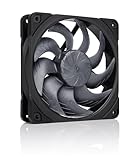
| Noctua NF-A12x25 PWM | Best Overall Quiet 120mm | Check on Amazon |
| Noctua NF-A12x25 G2 PWM chromax.Black | Best Premium Black Workstation Fan | Check on Amazon |
| GDSTIME 140mm x 38mm High Static Pressure Fan | Best High-Voltage Industrial Fan | Check on Amazon |
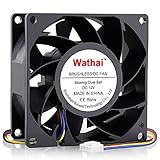
| Wathai 4Pin PWM DC 12V 80mm High CFM Fan | Best Small-Form-Factor Powerhouse | Check on Amazon |
| Thermaltake Riing 12 Series Blue | Best Ambient LED Static Pressure Fan | Check on Amazon |
| ARCTIC P12 Slim PWM PST | Best Ultra-Low Profile Fan | Check on Amazon |
How We Compared
To identify the top quiet static pressure fans, we evaluated models based on their physical design, blade geometry, noise levels, and mounting systems. We prioritized fans that utilize fluid dynamic or advanced magnetic bearings over cheap sleeve bearings, as these designs significantly reduce mechanical friction and noise over time. We paid close attention to blade tip clearance—the gap between the blade edge and the outer frame—as a tighter clearance prevents air leakages and boosts static pressure. Finally, we looked for integrated vibration dampening, such as rubberized corner pads, which prevent the transfer of hums and rattles to your PC chassis and desk.
The 7 Best Picks
ARCTIC P9 PWM PST
The ARCTIC P9 PWM PST is designed for compact, small-form-factor home office setups where standard-sized fans cannot fit. Measuring 92 mm, this compact fan features pressure-optimized blades that push air efficiently through dense radiator fins. The integrated PWM Sharing Technology (PST) allows you to daisy-chain multiple fans together to run off a single motherboard header, simplifying cable management. It also features a 0dB mode, which stops the fan completely during light office tasks, ensuring absolute silence when you are writing or reading.
- Highly affordable price point under nine dollars.
- 0dB mode allows for completely silent operation under light workloads.
- Smaller 92 mm size moves less total air volume than standard 120 mm options.
When to skip: Skip this model if your liquid cooling radiator requires standard 120 mm or 140 mm mounting holes.
Noctua NF-A12x25 PWM
For those seeking the absolute pinnacle of acoustic engineering in a home study, the Noctua NF-A12x25 PWM is the premier choice. This 120 mm fan is constructed from Noctua’s proprietary Sterrox liquid-crystal polymer, allowing for an incredibly tight 0.5 mm blade tip clearance. This engineering prevents air leakage around the edges, maximizing static pressure against radiator resistance without generating turbulent noise. Operating at a whisper-quiet level even under heavy processing loads, it keeps your workspace beautifully serene.
- Industry-leading static pressure-to-noise ratio.
- Ultra-tight 0.5 mm tip clearance prevents airflow backdraft.
- Premium price point may be restrictive for multi-fan radiator setups.
When to skip: Skip this fan if you are on a tight budget or prefer modern RGB lighting aesthetics over the classic brown-and-beige color scheme.
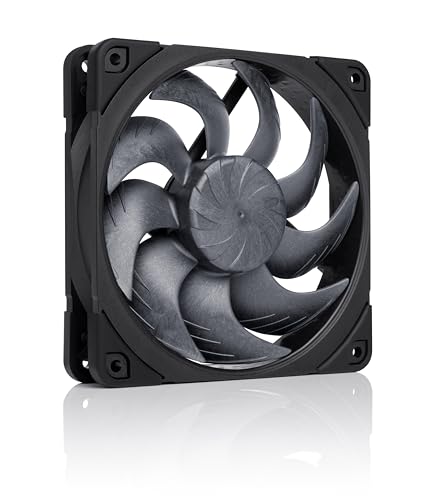
Noctua NF-A12x25 G2 PWM chromax.Black
If you love the unparalleled performance of Noctua but want to maintain a sleek, modern interior design in your office, the Noctua NF-A12x25 G2 PWM chromax.Black is your answer. This second-generation 120 mm fan features an optimized progressive-bend impeller and a load-adapted frame to squeeze out even more static pressure. Painted in a clean, professional matte black, it blends seamlessly into high-end workstations, eliminating the polarizing brown-and-beige color scheme while keeping acoustic output exceptionally low.
- Sophisticated, all-black aesthetic matches modern home office hardware.
- Next-generation impeller design offers superior pressure efficiency.
- Carries a premium price tag of nearly thirty-five dollars per fan.
When to skip: Skip this if you already own the original NF-A12x25, as the performance upgrade is incremental for standard setups.
GDSTIME 140mm x 38mm High Static Pressure Fan
Designed for heavy-duty cooling tasks, the GDSTIME 140 mm x 38 mm fan is built for users running demanding home servers or custom-loop liquid cooling systems. With an extra-thick 38 mm frame, it creates immense pressure to force air through the thickest radiators. It utilizes dual ball bearings for a long operating life and runs on a 24V 2-pin connection, making it a specialized, industrial-grade solution for serious workstations.
- Massive 38 mm thickness generates extreme static pressure.
- Dual ball bearings ensure long-lasting durability under continuous use.
- Requires a 24V power source, which is non-standard for typical PC motherboards.
When to skip: Skip this fan if you are looking for a standard 12V plug-and-play desktop PC cooling fan, as this model requires specialized power routing.
Wathai 4Pin PWM DC 12V 80mm High CFM Fan
The Wathai 80 mm fan is a compact powerhouse engineered for specialized small-form-factor radiators and home server enclosures where airflow restriction is high. Operating on a standard 12V DC connection with 4-pin PWM control, this high-CFM fan can ramp up its speed dynamically to clear out heat. While small, its blade pitch is aggressively optimized for static pressure, ensuring your compact radiator gets the direct airflow it needs to prevent thermal throttling.
- High CFM and high static pressure in a compact 80 mm footprint.
- PWM control allows for precise speed adjustments to manage noise levels.
- Produces a noticeable high-pitched whine at maximum operating speeds.
When to skip: Skip this model if you have room for a standard 120 mm fan, which will run much quieter while moving the same volume of air.
Thermaltake Riing 12 Series Blue
The Thermaltake Riing 12 Series Blue brings a touch of calm, ambient lighting to your home workspace without compromising radiator performance. This 120 mm fan features a patented circular LED ring that projects a smooth, blue glow. Built specifically for high-pressure radiator cooling, it features concentrated compression blades and a wind blocker frame to direct air inward. An anti-vibration mounting system using rubber pads keeps mechanical rattle to an absolute minimum.
- Striking blue LED ring adds clean, non-intrusive aesthetic appeal to your desk.
- Anti-vibration pads prevent noise transmission to the PC chassis.
- Acoustic performance is slightly louder than premium non-LED rivals.
When to skip: Skip this if you prefer a stealthy, completely dark PC build or require multi-color RGB customization.
ARCTIC P12 Slim PWM PST
If your home office desk setup features an ultra-compact mini-ITX PC, space is at a premium. The ARCTIC P12 Slim PWM PST is a 120 mm fan with a slimline profile of just 15 mm thickness, making it nearly half the depth of standard fans. Despite its thin frame, the blade geometry is optimized for high static pressure, allowing it to pull or push air through radiators in tight clearances where standard fans physically cannot fit.
- Ultra-slim 15 mm profile fits into extremely tight SFF enclosures.
- Highly competitive pricing at just over eight dollars.
- Slightly lower static pressure capacity compared to full-thickness P12 models.
When to skip: Skip this fan if you have ample space in your case, as a standard 25 mm thick fan offers superior pressure and lower noise.
Buying Guide
Understanding Static Pressure vs. Airflow (CFM)
When shopping for radiator cooling, looking at the Cubic Feet per Minute (CFM) rating alone can be misleading. CFM measures how much air a fan can move in an open space with zero resistance. However, radiators consist of dense, closely packed copper or aluminum fins. High-airflow fans lack the pushing power to force air through these gaps, causing the air to bounce back and spin uselessly. Static pressure (measured in mm H₂O) is the metric that matters. A high static pressure rating means the fan can maintain its airflow even when pushing against a dense barrier like a liquid-cooling radiator.
Acoustics and Bearing Types
The bearing is the heart of a fan and the primary source of mechanical noise. Cheap fans use sleeve bearings, which dry out, rattle, and fail quickly. For a quiet home office, look for Fluid Dynamic Bearings (FDB) or Noctua’s SSO2 (Self-Stabilizing Oil-Pressure) bearings. These designs use pressurized oil to keep the spinning shaft floating without direct metal-on-metal contact, resulting in near-silent operation and a lifespan of over 150,000 hours. Dual ball bearings are highly durable and great for industrial environments, but they tend to produce a slight mechanical clicking noise that can be annoying in a quiet room.
Sizing and Clearance Constraints
Standard PC radiators and cases are designed around 120 mm and 140 mm fan sizes. Always check your radiator’s specifications before purchasing. Additionally, pay attention to the thickness of the fan. The standard thickness is 25 mm, but slim fans (like the 15 mm ARCTIC P12 Slim) are available for tight spaces. Conversely, thicker fans (like the 38 mm GDSTIME) offer massive static pressure but require a significant amount of physical clearance inside your computer case.
Our Verdict
Selecting the best quiet static pressure fans for radiator cooling depends heavily on your budget and space constraints. If you want the absolute quietest, most engineered fan on the market and don’t mind paying a premium, the Noctua NF-A12x25 PWM (or its sleek G2 chromax.Black counterpart) is the undisputed champion. For budget-conscious builders who want near-silent performance without breaking the bank, the ARCTIC P12 Slim PWM PST and ARCTIC P9 offer incredible value and specialized form factors. As we look ahead to the evolving demands of high-performance home computing in 2026, keeping our work environments peaceful while maintaining excellent thermal efficiency remains a top priority.
FAQ
What is the difference between static pressure and high airflow fans?
Static pressure fans are designed to push air through tight restrictions, such as radiators and dusty mesh filters, using wide, curved blades. High airflow fans are designed to move a large volume of air through unrestricted spaces, like the open interior of a computer case, using thinner, more angled blades.
Why does radiator thickness affect fan choice?
Thicker radiators have more surface area and pack more fins per inch, which creates higher resistance to airflow. To cool a thick radiator quietly, you need a fan with exceptionally high static pressure. Thinner radiators can be cooled effectively with lower-pressure, ultra-quiet fans.
How does PWM control help reduce noise?
Pulse Width Modulation (PWM) allows your computer’s motherboard to precisely control the fan’s speed based on current system temperatures. Instead of running at 100% speed all the time, a PWM fan can spin slowly and silently during basic tasks like typing or browsing, only ramping up when you run demanding applications.
Are dual ball bearings quieter than fluid dynamic bearings?
No, dual ball bearings are generally louder than fluid dynamic bearings (FDB). While dual ball bearings are incredibly durable and resist heat well, they have more mechanical contact, which produces a faint humming or clicking noise. FDBs use fluid to eliminate contact, making them much quieter for home office environments.
Related guides
- Best Gaming PC for Overwatch 2: Ten Prebuilts Matched to Your Monitor (2026)
- Best Gaming PC for Baldur’s Gate 3: Matching CPU, VRAM and Storage to the Game (2026)
- Best Gaming PC for Apex Legends: Which Listings Fit a High-Refresh Setup (2026)
- Best RTX 3060 Gaming PCs: Eight Prebuilt Listings Compared by CPU, RAM and Cooling (2026)