SteamOS is Valve’s Linux-based operating system, built around a console-style Big Picture interface and Proton for running Windows games. Windows remains the default choice for gaming PCs because of its universal software and hardware compatibility. The short version: SteamOS suits people who want a streamlined, controller-first experience and don’t mind occasional compatibility gaps, while Windows suits people who need guaranteed support for every game, peripheral, and creative application without checking compatibility first.
Top 3 picks at a glance
Quick answer
Choose SteamOS if your library is mostly Steam-based single-player and co-op games, you want a low-maintenance system, and you’re comfortable checking Proton compatibility before buying new titles. Choose Windows if you play competitive shooters with kernel-level anti-cheat, use non-Steam launchers heavily, or rely on Windows-only creative and peripheral software.
As an Amazon Associate we earn from qualifying purchases at no extra cost to you. Product prices and availability are accurate as of the date shown and are subject to change.
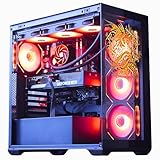
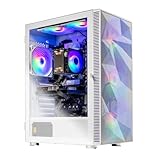
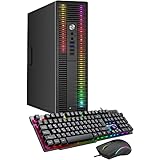


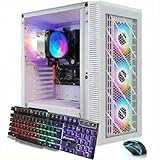
| Factor | SteamOS | Windows |
|---|---|---|
| Setup effort | Low on supported hardware | Low, universal |
| Modding support | Inconsistent, some titles need extra steps | Broad, native tooling |
| Game compatibility | Most titles via Proton, some gaps | Near-universal |
| Anti-cheat support | Inconsistent | Full support |
| Interface | Console-style, controller-first | Traditional desktop |
What SteamOS actually is
SteamOS is built on the same Linux and Proton foundation used by the broader gaming-Linux distros like Bazzite and Nobara, but it’s maintained directly by Valve and tuned specifically for the Steam Deck and a growing list of third-party handhelds. Its defining feature is the Big Picture-style interface that boots directly into a game library view rather than a traditional desktop, though a desktop mode is available underneath for troubleshooting or installing additional software.
Because Valve controls both the hardware (on Deck) and software, SteamOS on official devices benefits from tight integration — driver updates, Proton-GE-equivalent compatibility patches, and power management are all tuned together. On third-party or community-installed hardware, that integration is looser, and you’re more likely to need manual driver configuration.
SteamOS updates on Valve’s own schedule, which tends to be less frequent but more thoroughly tested than a rolling-release distro, prioritizing stability for a device many people use as their only gaming machine.
If you’re evaluating SteamOS for a desktop build rather than a handheld, treat it more like an experimental option: check current community reports on your specific GPU and motherboard chipset before committing, since Valve’s testing focuses on their supported device list.
Under the hood, SteamOS shares its base layer with Arch Linux, and Valve periodically publishes the source for its own tooling, which is part of why community ports to desktop hardware exist at all rather than being purely reverse-engineered. That said, “shares a base” doesn’t mean identical behavior — SteamOS’s power management, suspend/resume handling, and driver bundling are specifically tuned for the Deck’s APU and battery, so a desktop with a discrete NVIDIA card is running well outside the configuration Valve actually validates.
A common misconception is that SteamOS and “SteamOS-like” community distros (including some Bazzite variants) are interchangeable — they share design philosophy and some tooling, but only Valve’s own builds are SteamOS proper, and community builds can lag behind or diverge from Valve’s actual driver and Proton versions in ways worth checking before assuming feature parity with a real Steam Deck.
Suspend and resume behavior is another area where the gap between official Deck hardware and a community desktop install shows up clearly. On Deck, suspending mid-game and resuming later is a core, heavily optimized workflow Valve specifically tunes for; on a desktop PC running a community SteamOS build, this same behavior is far less consistently tested and can vary in reliability depending on your specific GPU and motherboard combination, which is worth verifying directly with your own hardware rather than assuming Deck-level polish automatically carries over.
What Windows still does better
Windows remains the default because game developers, anti-cheat vendors, and peripheral manufacturers build and test against it first. When a new game launches, Windows compatibility is a given; Linux and SteamOS compatibility through Proton is something the community verifies afterward, sometimes within days, sometimes never for anti-cheat-protected titles.
Creative and productivity software also skews heavily toward Windows. If your gaming PC doubles as a workstation for streaming production tools, certain peripheral configuration utilities, or professional applications, Windows avoids the compatibility research SteamOS requires.
Windows also has the deeper hardware support story: every GPU, motherboard feature, and USB peripheral you buy is virtually guaranteed to have Windows drivers on day one. Our guide on updating graphics drivers safely assumes Windows for this reason — it’s still where the driver ecosystem is most mature.
The trade-off is maintenance. Windows updates, background services, and third-party bloatware can accumulate over time in ways that hurt gaming performance if left unmanaged, which is part of why guides like optimizing Windows for gaming exist in the first place.
Day-one game patch support is another practical gap: when a major title ships a large post-launch patch, Windows players typically see it apply cleanly through Steam with no extra steps, while a SteamOS or Linux player occasionally needs a Proton version bump or a community-reported workaround to keep the patched build running smoothly for the first few days after release. This gap has narrowed significantly compared to several years ago but hasn’t fully closed for every title.
Windows also wins clearly on niche but real use cases: some VR headsets, some competitive-tournament-mandated software, and some older legacy games with copy-protection schemes from the DirectX 9 and earlier era have compatibility issues on Linux that simply don’t exist on Windows, since those tools were never designed with a non-Windows target in mind.
Modding is another area where the gap can be significant depending on the specific game and mod tooling involved. Many popular modding frameworks and mod manager applications were built exclusively with Windows in mind, and while Proton runs a surprising number of them, mod installation processes that rely on Windows-specific scripting or registry interaction can require extra manual steps or simply not work on SteamOS in the same way they do on a native Windows install.
Interface and daily-use differences
SteamOS’s Big Picture-first design means most day-to-day interaction happens through a controller-friendly grid of your library, achievements, and store, closer to a console dashboard than a desktop. Installing, launching, and managing games rarely requires a keyboard and mouse once initial setup is done.
Windows gives you the traditional desktop, taskbar, and file system access by default, with Steam’s own Big Picture mode available as an optional overlay if you want a similar console-style experience without switching operating systems entirely.
For a couch-gaming or handheld setup where you rarely need a keyboard, SteamOS’s interface removes friction. For a desk setup where you’re also browsing, chatting, and multitasking outside games, Windows’s traditional multitasking model is generally more practical.
Neither interface choice is permanent — Windows users can install Steam’s Big Picture mode for a similar feel, and SteamOS’s desktop mode gives access to a more conventional environment when needed.
A subtler difference shows up in background task management: Windows’ taskbar and Alt-Tab behavior make it trivial to glance at Discord, a browser, or a second monitor’s content mid-game, while SteamOS’s console-style session is deliberately designed to keep you inside the game or the Big Picture shell, with switching to desktop mode feeling more like a deliberate mode change than a quick glance. If your play style involves a lot of tabbing between a game and other windows, this is worth testing before you commit to a SteamOS-first setup on a desk-based system.
Anti-cheat and competitive game support
The single biggest practical gap between SteamOS and Windows is kernel-level anti-cheat support. Some publishers have added Linux/Proton support for their anti-cheat systems, while others have not, and this list changes over time as games launch, get patched, or get delisted. There’s no way to give a permanent list here that stays accurate — check the specific title’s current status before assuming.
Steam’s own Deck Verified and Playable ratings are a reasonably reliable day-one indicator, since Valve tests against real anti-cheat behavior as part of that certification, but they’re specific to Steam Deck hardware and don’t always translate directly to a different SteamOS install.
If competitive shooters with strict anti-cheat are a core part of your library, keeping a Windows install available — either as your primary OS or via dual-boot — avoids repeatedly hitting this wall.
The list of blocked titles skews toward player-versus-player competitive genres specifically, since that’s where cheating has the biggest impact on other players’ experience — cooperative, single-player, and many casual multiplayer games are far less likely to be affected by this gap at all, which is worth keeping in mind if your library leans toward those genres rather than ranked competitive shooters.
It’s worth understanding why this gap exists rather than treating it as an arbitrary limitation: many kernel-level anti-cheat systems work by monitoring low-level system behavior in ways that are tightly coupled to the Windows kernel, and porting that same monitoring approach to Linux is a substantial engineering investment some anti-cheat vendors haven’t made, either for cost reasons or because they’re wary of the reduced visibility Linux’s more open kernel model gives their detection methods compared to Windows.
Some publishers have taken a middle path, enabling Linux support only for Steam Deck-verified hardware profiles specifically rather than all Linux installs broadly, out of concern that a fully open Linux desktop is easier to cheat on than Valve’s more locked-down Deck hardware. This means a game can be playable on an actual Steam Deck while still blocking a desktop SteamOS install running the identical operating system version — a distinction that’s easy to miss when reading a general compatibility report.
Storage, backups, and switching between the two
Both systems can coexist on the same PC through dual-booting, letting you boot into whichever fits your session — Windows for a competitive match, SteamOS or a SteamOS-like distro for single-player sessions. This requires separate partitions or drives and a boot manager to choose between them at startup.
Before switching your primary OS on a gaming PC, back up your save files and any local game data that doesn’t sync to Steam Cloud. Our guide on backing up your game saves covers this for titles that store progress locally rather than in the cloud.
If you’re not ready to commit to a full switch, running SteamOS or a similar distro from a separate drive lets you test compatibility with your specific library without touching your existing Windows install, similar to the live-USB approach used when testing other Linux distros.
Game libraries themselves aren’t directly shareable between a Windows Steam install and a SteamOS one on the same PC even when both point at the same physical drive, since Proton’s compatibility layer stores its own per-game configuration data alongside the Windows build files — expect each OS to redownload or reinstall your library separately unless you specifically set up shared storage and accept the added complexity of managing it.
Our guide on dual booting Windows and Linux for gaming covers the partitioning and bootloader steps in more depth if you decide the dual-boot route is worth the setup time for your situation.
Cloud saves through Steam significantly reduce the friction of switching between the two on the same account, since most Steam titles with cloud save support will pick up right where you left off regardless of which OS you’re currently running. The gap shows up mainly with non-Steam launchers or titles that store save data locally without cloud sync, where you’re responsible for manually keeping saves in sync between the two environments if you plan to genuinely alternate between them regularly rather than picking one as primary.
Hardware compatibility considerations
SteamOS’s driver support is strongest on AMD hardware, reflecting Valve’s own hardware choices for the Steam Deck and its close working relationship with AMD on driver tuning. NVIDIA GPU support on SteamOS is improving but has historically lagged behind AMD, so NVIDIA owners should research current driver status for their specific GPU generation before switching a desktop over.
Peripherals generally fare well since SteamOS inherits broad Linux input device support, but niche peripherals with vendor-specific configuration software (custom RGB lighting profiles, some competitive mice with on-board memory editors) may lack a native configuration tool, requiring community alternatives or accepting default behavior.
Printer, scanner, and other peripheral support outside of gaming input devices is generally a non-issue for a dedicated gaming PC but worth flagging if the same machine doubles as a household general-purpose computer — most consumer printers and scanners have solid Linux driver support today, though it’s worth a quick check for your specific model before assuming parity with the plug-and-play experience Windows offers for that category of device.
Multi-monitor setups, ultrawide displays, and high refresh rate configurations above 144Hz are additional areas worth testing specifically on SteamOS before committing, since desktop-oriented display configurations weren’t the primary design target the way a single embedded display on a handheld was — most work correctly, but edge cases around refresh rate switching and variable refresh rate support have historically needed more manual configuration than the equivalent setup on Windows.
Audio hardware is another area worth a quick check before fully committing a desktop build to SteamOS: multi-channel surround setups, some USB DACs, and certain Bluetooth audio codecs have had inconsistent support on Linux generally, SteamOS included, compared to the broad plug-and-play support Windows offers across nearly all audio hardware. If your setup includes anything beyond a standard stereo output or a common USB headset, testing audio specifically during your evaluation period avoids an unpleasant surprise after you’ve already committed to the switch.
Frequently asked questions
Can I install SteamOS on a regular desktop PC?
Officially SteamOS ships on Valve’s own hardware and select third-party handhelds, but community builds let you install it on compatible desktop hardware. Driver support is inconsistent outside Valve-endorsed devices, so expect more troubleshooting than on a Steam Deck.
Does SteamOS run every game in my Steam library?
No. SteamOS relies on Proton for Windows game compatibility, and titles with kernel-level anti-cheat or unusual DRM often don’t run. Steam’s store page and the Deck Verified rating give a per-game indication before you buy or switch.
Is Windows still necessary for competitive multiplayer games?
For many competitive shooters with kernel-level anti-cheat, yes. This isn’t a fixed rule and changes as publishers add or drop support, so check the specific game rather than assuming based on genre.
Will switching to SteamOS void my PC’s warranty?
Installing a different operating system doesn’t typically void hardware warranties, but always check your specific manufacturer’s terms, especially for prebuilt systems or laptops with locked-down firmware.
Which is faster, SteamOS or Windows, for the same hardware?
Differences are usually small for supported titles and can go either way depending on the game and Proton version. Neither system has a consistent, universal performance lead across the board.