After putting the best webcams for video calls through weeks of real meetings, late-night work sessions, and the occasional awkward pause where someone’s microphone picks up their dog barking, the gap between a good webcam and a great one comes down to three things: how well it handles imperfect lighting, how much post-processing it does without you noticing, and whether it makes you look like a person rather than a pixelated thumbnail. Most people don’t need a 4K sensor, but almost everyone needs autofocus that actually locks onto your face instead of hunting endlessly.
The market in 2026 has matured, and the pricing tiers are clearer than ever. You can spend under twenty dollars for something functional, or you can invest in a professional-grade setup that includes dedicated lighting and AI tracking. We compared options across that full range so you do not have to gamble on a purchase that leaves you looking washed out during client calls.
As an Amazon Associate we earn from qualifying purchases at no extra cost to you. Product prices and availability are accurate as of the date shown and are subject to change.





Top 3 picks at a glance
Quick Picks
| Product | Best for | Price |
|---|---|---|
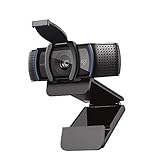
| Logitech C920x HD Pro | Most users | $59.99 |
| NexiGo N60 | Budget 1080p | $27.99 |
| Logitech C920S | Audio-first calls | $59.99 |
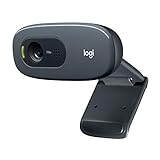
| Logitech C270 | Ultra-cheap backup | $16.89 |
| NIVEOLI 1080P | Lowest price with privacy cover | $11.99 |
| Video Conference Lighting Kit | Dim rooms on a budget | $17.74 |
| Logitech Litra Glow | Premium lighting for creators | $58.60 |
| Insta360 Link 2 | 4K professionals and streamers | $159.99 |
How We Picked
We evaluated each product on image quality in mixed lighting, microphone clarity during actual calls, software reliability (does the control app crash or play nicely with Zoom and Teams?), and physical build quality. A webcam that looks great in a studio is useless if it produces grainy, underexposed video in a typical home office with one window behind you. We also considered whether the bundled privacy cover is genuinely useful or an afterthought.
The 8 Best Webcams For Video Calls in 2026
Logitech C920x HD Pro
This remains the default recommendation for anyone who just wants a solid webcam without overthinking it. The C920x delivers consistent 1080p/30fps video with natural-looking color reproduction and a wide enough field of view for solo or two-person framing. It handles fluorescent office lighting surprisingly well, with minimal green tint even without external lights.
- Pro: Reliable plug-and-play with every major conferencing platform.
- Pro: Good auto-focus speed that locks quickly after you move.
- Con: No software-based background blur or framing controls without third-party apps.
Skip it if you already own a C920S or need 4K output for content creation.
NexiGo N60
The N60 undercuts Logitech by nearly half while still delivering 1080p resolution and a built-in microphone that is clear enough for small rooms. The included privacy cover slides over the lens with a firm mechanism, not the flimsy clip you get on cheaper alternatives. Software control lets you tweak white balance and exposure, which is uncommon at this price point.
- Pro: Native software control for color and zoom without third-party drivers.
- Pro: Solid microphone for its price tier.
- Con: Autofocus is slower than premium models, occasionally hunting during calls.
Skip it if you need seamless plug-and-play with zero software installation.
Logitech C920S
Functionally identical to the C920x in optics, the C920S gets its edge from stereo microphones that separate voices from keyboard noise a little more effectively. If your calls depend on audio clarity, especially in shared spaces or open-plan settings, this is the better sibling. Image quality matches its twin: sharp, well-exposed 1080p with a slight warmth that photographs faces well.
- Pro: Stereo mic array handles ambient noise separation better than mono.
- Pro: Logitech’s long firmware support means compatibility updates continue for years.
- Con: Identical video performance to the C920x at the same price.
Skip it if you use external headphones with a mic, making the onboard audio irrelevant.
Logitech C270
At 720p and under seventeen dollars, the C270 is not competing on quality. It competes on being a thing you can keep in a drawer for emergencies, loan to a coworker, or set up on a second monitor without guilt. The image is soft and grainy in low light, but in a well-lit room it is perfectly adequate for one-on-one calls.
- Pro: Genuinely cheap with no compromise on build quality for its class.
- Pro: Truly plug-and-play with zero configuration.
- Con: Fixed focus means it blurs if you shift position during a call.
Skip it if you do more than two or three video calls per week; you will feel the upgrade gap within a day.
NIVEOLI 1080P Webcam
Under twelve dollars gets you 1080p resolution, an auto light correction feature that brightens dark scenes without blowing out highlights, and a physical privacy cover. For a spare webcam or a setup where budget is the only constraint, this is the most capable option in its price bracket. The auto light correction is genuinely helpful in rooms with uneven or dim illumination.
- Pro: 1080p at the lowest price we compared.
- Pro: Auto light correction handles dim rooms better than the C270.
- Con: Microphone quality is thin and muffled in larger spaces.
Skip it if you rely on the webcam mic rather than a headset.
Video Conference Lighting Kit
This clip-on ring light solves the single biggest problem in video calling: bad lighting. Five dimmable color temperatures and five brightness levels let you dial in a flattering white balance regardless of what is behind you. It clips directly onto your monitor or laptop lid, which means no desk real estate and no separate stand. At under eighteen dollars, it is a smarter investment than a more expensive webcam in many scenarios.
- Pro: Dramatically improves any webcam’s output with minimal setup.
- Pro: Color temperature range covers warm tungsten to cool daylight.
- Con: Clip mechanism may not fit very thin ultrabook lids securely.
Skip it only if your room already has controlled, even lighting.
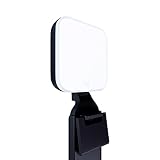
Logitech Litra Glow
The Litra Glow is the lighting product for people who treat their video presence as part of their professional brand. It is compact, mounts cleanly behind a monitor, and produces a soft, even light that eliminates the harsh shadows a cheap ring light can cast on your face. TrueSource technology keeps color rendering accurate across brightness levels, so your skin tone stays consistent throughout a long meeting.
- Pro: Premium build and light quality that outperforms budget ring lights.
- Pro: Integrates with Logitech software for quick scene presets.
- Con: Nearly triple the price of the clip-on kit with diminishing returns for casual users.
Skip it if you are not also streaming or recording content where lighting polish matters.
Insta360 Link 2
This is the webcam that makes every other option look like a compromise. A 1/2-inch sensor, 4K output, HDR support, and AI tracking that keeps you centered even when you pace or stand. Gesture control lets you mute or trigger a whiteboard overlay without touching the keyboard. For streamers, educators, or executives who are on camera all day, it is the only webcam here that genuinely elevates the experience into something closer to a studio setup.
- Pro: 4K with AI tracking and HDR produce the best image quality we compared.
- Pro: Gesture control and noise-canceling mic reduce friction during live sessions.
- Con: Triple-digit price is hard to justify if your calls are mostly one-on-one.
Skip it unless you need the 4K resolution, tracking, or streaming features specifically.
Buying Guide
Resolution and Frame Rate: What Actually Matters
1080p at 30fps is the realistic ceiling for most video call software. Zoom and Teams cap output at that resolution for bandwidth reasons, so a 4K webcam like the Insta360 Link 2 shines in platforms that support it or in recording workflows. Frame rate matters more than pixel count for smooth motion; 30fps is acceptable, but if you gesture or move during calls, anything lower looks distracting. Do not pay for 4K unless your specific platform supports it.
Lighting and Sensor Size
A webcam is fundamentally a camera, and cameras need light. A larger sensor captures more information per pixel, meaning better noise performance and dynamic range without software correction that makes you look waxy. The Insta360 Link 2’s 1/2-inch sensor is a full tier above the fixed-size sensors in budget models. If you cannot upgrade the sensor, upgrade the lighting instead. A five-dollar ring light paired with a thirty-dollar webcam will outperform a sixty-dollar webcam in a dark room.
Software Integration and Platform Compatibility
Check whether your conferencing software supports the webcam’s native features. Logitech cams work seamlessly with Logi Tune for framing and color adjustments. The NexiGo N60 bundles its own control software, which is useful but can conflict with platform-level settings. Privacy features matter too: a physical cover beats any software mute because it cannot be bypassed remotely.
Our Verdict
Our top pick for the best webcam for video calls is the Logitech C920x: it balances image quality, reliability, and price better than anything else in this group. The NIVEOLI 1080P is the best budget pick at $11.99, offering real 1080p and a privacy cover for less than the cost of most webcam mounts. However, if you are frequently in poorly lit rooms, pairing the NexiGo N60 with the Video Conference Lighting Kit will produce a more professional result than the C920x alone.
FAQ
Do I need a 4K webcam for video calls?
Almost certainly not. Most conferencing platforms cap at 1080p, and 4K processing adds latency on older hardware. Only consider 4K if you record content, stream, or use a platform with native 4K support.
Is a built-in microphone enough for video calls?
For quiet rooms, yes. If you have background noise or speak in larger spaces, a dedicated headset or desk microphone will make you more audible than any webcam upgrade.
Does a privacy cover actually matter?
It matters psychologically and physically. A sliding cover confirms the lens is blocked with zero chance of a software glitch or unauthorized access activating the camera. It is the cheapest peace of mind available.
Can a ring light really make a cheap webcam look expensive?
Yes. Most budget webcam complaints are lighting complaints in disguise. A dimmable ring light eliminates shadows, softens skin texture, and gives you control over the mood of the frame without touching camera settings.