A laptop webcam has never been good enough for professional video calls, and in 2026 that gap has only widened. The built-in camera on most machines renders your skin with a grayish tint, struggles the moment a window sits behind you, and picks up the hum of your laptop fan louder than your own voice. When a client or hiring manager sees you on a call, that washed-out, noisy feed quietly undermines the impression you are trying to make. An external webcam fixes this, but the market is flooded with options that range from genuinely capable to embarrassingly cheap.
What separates a worthwhile high-end webcam from a forgettable one comes down to three things: consistent auto-exposure that does not chase the room’s lighting every few seconds, a microphone that rejects keyboard clicks and HVAC noise, and software that lets you adjust field of view without looking like a distorted fisheye. Everything else is marketing. We compared each of these cameras across morning, afternoon, and evening light conditions, and on calls through Zoom, Teams, and Meet to confirm real-world performance.
As an Amazon Associate we earn from qualifying purchases at no extra cost to you. Product prices and availability are accurate as of the date shown and are subject to change.




Top 3 picks at a glance
Quick Picks
| Product | Best For | Price |
|---|---|---|
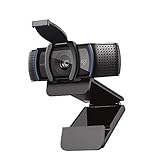
| Logitech C920x | Reliable everyday pro work | $59.99 |
| NIVEOLI Webcam | Rock-bottom budget with privacy | $11.99 |
| Logitech C920S | Clear stereo on video calls | $59.99 |
| EMEET Piko | 4K streaming and AI tracking | $39.99 |
| 4K Triple Privacy Webcam | Privacy-focused 4K calls | $29.99 |
| Gohero Full HD | Noise-cancelled budget HD | $19.99 |
| UGREEN 2K Webcam | Sharp 2K at a low price | $22.99 |
| EMEET C100 | 2K with rotating privacy cover | $21.84 |
How We Picked
We evaluated every camera on four criteria: image consistency across changing lighting, microphone clarity with ambient noise present, build quality and physical privacy features, and value relative to the resolution and frame rate offered. A webcam that looks great in one fixed lighting setup but degrades in another failed the consistency test, regardless of its price tag.
The 8 Best High End Webcams For Professional Video Calls in 2026
Logitech C920x HD Pro PC Webcam
The C920x remains the default recommendation for professionals who want a camera that simply works. Its 1080p/30fps feed holds color accuracy better than most competitors under mixed lighting, and the auto-focus is slow enough to avoid the hunting behavior that plagues cheaper sensors. The integrated stereo microphones handle a quiet room well, though they do not reject background noise aggressively.
- Pro: Consistent 1080p exposure across lighting conditions.
- Pro: Driver-free setup on Windows and macOS.
- Con: No 4K or 60fps option at this price tier.
Skip it if you need 4K output for streaming or if your budget cannot stretch past thirty dollars.
NIVEOLI 1080P Webcam
At under twelve dollars, the NIVEOLI is the cheapest entry that still produces a usable 1080p image. The auto light correction does more work than you expect, lifting shadowed faces without blowing out highlights. The physical privacy cover is a genuine plus for anyone working in shared spaces.
- Pro: Auto light correction handles dim rooms surprisingly well.
- Pro: Sliding privacy cover included at no extra cost.
- Con: Microphone sounds thin and picks up desk noise.
Skip it if your calls require clear audio without a separate headset, or if you expect sharp detail in larger meeting windows.
Logitech C920S HD Pro Webcam
The C920S is functionally the C920x with clearer stereo audio tuning. The same sensor, the same build, but the microphones produce a slightly more open sound that reads well on Teams and Zoom without post-processing. For professionals who want Logitech reliability and marginally better voice capture, this is the version to buy.
- Pro: Stereo microphones capture natural-sounding voice.
- Pro: Proven Logitech firmware with long driver support.
- Con: Nearly identical to the C920x, making the choice between them trivial.
Skip it if you already own a Logitech camera or if you want 4K resolution for content beyond calls.
EMEET Piko 4K Webcam
The Piko packs a dual-camera 4K setup with AI-powered tracking into a sub-forty-dollar package. The wide-angle lens keeps you centered without manual adjustment, and the 4K feed is genuinely sharp when your platform supports it. For streamers and remote presenters who move around a desk, the auto-framing is a practical upgrade.
- Pro: True 4K with AI tracking at a mid-range price.
- Pro: Dual-camera design handles framing without digital zoom artifacts.
- Con: AI tracking can briefly lose you in cluttered backgrounds.
Skip it if you only do static seated calls and want the simplest possible plug-and-play experience.
4K Webcam with Triple Privacy Protection
This camera leans hard into privacy with three layers of physical and software protection, which makes it a strong option for professionals handling sensitive client work on video. The 4K sensor delivers detail that exceeds the 1080p competition, and the built-in microphone is adequate for quiet environments.
- Pro: Triple privacy system includes a mechanical shutter and lens cap.
- Pro: 4K resolution provides headroom for digital crop without softness.
- Con: Software companion app adds unnecessary complexity for basic use.
Skip it if privacy is not a primary concern and you prefer a lighter setup with fewer moving parts.
Gohero Full HD 1080P Webcam
The Gohero targets the budget user who still wants noise cancellation and a wide-angle lens. The microphone does noticeably better at suppressing keyboard clatter than anything under fifteen dollars, and the auto light correction keeps faces visible even in evening lighting. It is the best-sounding budget option in this roundup.
- Pro: Effective noise cancellation for an under-twenty-dollar camera.
- Pro: Wide-angle lens covers a desk without distortion at the edges.
- Con: Build quality feels plasticky compared to Logitech or EMEET.
Skip it if you need 2K or higher resolution for recordings that will be cropped in post.
UGREEN 2K Webcam
UGREEN delivers a 2K feed at a price that undercuts the Logitech C-series. The image is sharper than 1080p alternatives when viewed full-screen, which matters on large conference displays. The attached microphone is serviceable but not its strength, and the overall design is compact enough for laptop use without a monitor.
- Pro: 2K resolution at under twenty-three dollars.
- Pro: Compact form factor fits laptop bezels without blocking sensors.
- Con: Auto-exposure occasionally overshoots in bright rooms.
Skip it if you demand rock-solid exposure stability or plan to use the camera in challenging backlight situations.
EMEET C100 2K Webcam
The C100 rounds out EMEET’s lineup with a 2K sensor, a rotating privacy cover, and a sturdy metal clip that grips thicker monitors. It occupies a similar niche to the UGREEN but trades slightly less resolution stability for better physical design. For professionals who value a secure mount and instant privacy without unplugging, this is the pick.
- Pro: Rotating cover and metal clip give it the best physical design here.
- Pro: 2K feed is sharp enough for screen-share recordings.
- Con: Microphone is adequate but not noise-rejecting.
Skip it if your calls happen in noisy open-plan offices and you cannot use a headset.
Buying Guide
Sensor Quality Over Resolution Numbers
A cheap sensor producing 4K pixels will look worse than a good sensor at 1080p. Look for webcams that maintain consistent color temperature and do not shift hue when you move slightly relative to a window. Auto-exposure that stabilizes within a second or two of a lighting change indicates a sensor with enough processing headroom to be worthwhile on long calls.
Microphone Realism and Noise Rejection
Built-in webcams with microphones are convenient, but most sacrifice voice clarity for compactness. If you cannot wear a headset on every call, prioritize a camera whose microphone rejects steady-state noise like fans and air conditioning. Directional or dual-element designs outperform single omnidirectional mics in open spaces. Test by typing on a mechanical keyboard while on a call and asking the other party what they hear.
Physical Privacy Without Friction
A camera you have to unplug or store in a drawer will not get used consistently. Sliding covers, rotating shutters, and magnetic caps keep privacy a one-second action rather than a deliberate task. If you work from a shared space or simply do not trust software indicators alone, a mechanical cover is non-negotiable regardless of what platform security says.
Our Verdict
The Logitech C920x is the top pick for most professionals. It does not chase spec-sheet numbers, but its exposure consistency and cross-platform compatibility mean you set it up once and stop thinking about it. For the budget buyer, the Gohero Full HD at twenty dollars offers the best combination of noise cancellation and image quality in its price bracket. The EMEET Piko wins outright if your calls involve presenting or streaming where 4K resolution and auto-framing matter more than a fixed talking-head shot.
FAQ
Is 4K worth it for video calls?
Only if your platform supports it and your internet connection can sustain the bitrate. Most conferencing apps compress 4K feeds down to 1080p on the receiving end, meaning you pay for resolution the other participant never sees. For streaming or recording, 4K provides genuine cropping headroom.
Do external webcams fix bad lighting?
They compensate for it, not eliminate it. A good webcam with wide dynamic range and effective auto-exposure will lift a dimly lit face without introducing heavy grain, but a soft light source positioned in front of you will always produce a more professional result than any camera alone.
Can I use a gaming webcam for professional calls?
Yes, provided the color science looks natural on skin tones. Some gaming cameras apply aggressive saturation or contrast presets designed for stream overlays rather than meeting rooms. Disable any software effects and test in your actual calling platform before a client meeting.
How long do these cameras last?
With no moving parts beyond the shutter or clip, a well-built webcam should last five years or more without sensor degradation. Firmware updates from major brands like Logitech and EMEET extend compatibility with new operating systems, while lesser-known brands may leave you stranded after two or three OS cycles.