Finding the best shotgun microphones for wildlife recording is a different challenge than chasing them for video interviews or podcast work. Your subject is unpredictable, often hundreds of feet away, and the environment between you and it is layered with wind gusts, rustling leaves, insect drones, and competing bird calls that can smear a fragile signal into noise. I have spent seasons lying motionless at the edge of wetlands and forests with various rigs, and the difference between a mic that captures the subtle scrape of a heron’s foot on mud and one that produces a washable hiss comes down to polar pattern precision, self-noise, and how well the physical design survives being knocked against a branch or left in a damp vest pocket.
What separates good from bad in this niche is not just a spec sheet. A tight lobar pattern matters only if the interference tube is long enough to actually enforce that pattern at the frequencies where animals vocalize. A low-noise preamp is useless if the connector wiggles and introduces crackle the moment you shift position. The market has flooded with compact on-camera mics that look like they belong in a wildlife rig but collapse under real field conditions, so sorting them honestly matters more than ever in 2026.
As an Amazon Associate we earn from qualifying purchases at no extra cost to you. Product prices and availability are accurate as of the date shown and are subject to change.




Top 3 picks at a glance
Quick Picks
| Product | Best for | Price |
|---|---|---|
| Spy-MAX Sound Pro III | Standalone long-range surveillance recording | $389 |
| Shure VP89L | Maximum off-axis rejection on demanding field shoots | $1,269 |
| Sennheiser MKE 400 | DSLR and mirrorless camera shooters on a moderate budget | $187.31 |
| Audio-Technica AT897 | The all-around best balance for serious field recordists | $269 |
| Movo X1-Mini | Smartphone-based birding and casual wildlife capture | $69.95 |
| Movo VXR10 | Absolute lowest entry point for on-camera directional audio | $35.96 |
| RØDE VideoMicro II | Compact mirrorless kits needing better audio without bulk | $80 |
| Ruittos Condenser Mic | Budget XLR setups with a boom pole or pistol grip | $24.99 |
How We Picked
We prioritized four criteria that actually dictate results in the field: polar pattern specificity at the frequencies where wildlife vocalizations live, self-noise and handling-noise floor so you are not capturing your own tremble, physical ruggedness and weather tolerance because wildlife work is not a studio environment, and connectivity flexibility that lets you move between a handheld recorder, a camera hot shoe, and a laptop interface without owning three cables.
The 8 Best Shotgun Microphones For Wildlife Recording in 2026
Spy-MAX Sound Pro III
This set is built for recordists who want a complete, independent audio rig without pairing a mic to a camera or interface. The integrated recorder with 530 hours of storage means you can leave it in a blind or hide for an entire day and collect continuous audio, while the long-range directional design reaches out to capture subjects up to 300 feet away without needing to close distance.
- Pro: Self-contained recorder eliminates interface compatibility headaches.
- Pro: Battery life is exceptional for a single-session field deployment.
- Con: The all-in-one form factor is bulkier than a bare mic on a pistol grip, making it harder to aim quickly.
Skip this if you already have a dedicated field recorder and just need a mic capsule, or if you need audio synced to video in real time.
Shure VP89L
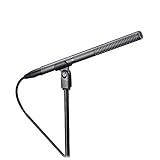
The VP89L is the mic for people who are tired of ambient bleed and want surgical isolation. Its extremely narrow pickup angle is the tightest lobar pattern we compared, pulling a single fox bark out of a chorus of insects without smearing the background into mush. The modular design lets you swap the long tube for shorter or medium versions, so the same purchase covers a season of changing targets.
- Pro: Unmatched off-axis rejection among production shotguns.
- Pro: Rugged metal housing survives being dropped on rocky terrain.
- Con: The price is prohibitive for hobbyists, and it requires phantom power, adding a battery or interface to your field load.
Skip this if your budget is under $400 or you are capturing quiet, close-range subjects that do not need extreme rejection.
Sennheiser MKE 400
The MKE 400 hits a practical sweet spot for wildlife shooters who run a DSLR or mirrorless body and want better audio than the built-in mic provides. Dual TRS and TRRS connectors mean the same mic works on a camera, a phone, or a small recorder without adapters, and the compact footprint keeps your rig nimble while you are tracking movement.
- Pro: Connector versatility covers nearly every field device in one cable set.
- Pro: Low-profile shape sits close to the camera, reducing wind turbulence around the capsule.
- Con: The short interference tube limits true off-axis rejection at longer distances compared to dedicated long shotguns.
Skip this if you need to isolate sounds beyond about 50 feet, as the narrow pattern simply cannot compete with longer tubes.
Audio-Technica AT897
This line/gradient design offers genuine XLR connectivity with a 40-60 cm interference tube that balances lobar rejection against a natural off-axis rolloff, so you get focus without the hollow, over-compressed character that some tight shotguns impose on bird song. It runs on phantom power or a single AA battery, which is a field lifesaver when your interface dies mid-trail.
- Pro: Dual power options give you insurance against dead batteries on long excursions.
- Pro: XLR output pairs with any recorder or interface without adapters.
- Con: Lacks the extreme narrow pattern of the VP89L, so heavy ambient environments can still bleed in at moderate angles.
Skip this if you need a camera hot-shoe plug-and-play solution; it is a recorder-first mic.
Movo X1-Mini
For birders and casual naturalists who already hold a smartphone steady while observing, the X1-Mini removes the need for a separate recorder entirely. The dual analog and digital outputs connect to phones, cameras, and computers via 3.5mm or USB-C, and the supercardioid pattern offers modest but real improvement over a phone mic for isolating a single call.
- Pro: USB-C and analog in one unit covers nearly every modern device.
- Pro: Small enough to keep in a chest pocket alongside binoculars.
- Con: The short tube and supercardioid (not lobar) pattern mean it cannot reject noise from the sides or rear effectively.
Skip this if you need more than a modest improvement over built-in mics for serious long-range isolation.
Movo VXR10
The VXR10 is the most affordable way to put any directional rejection on a camera hot shoe. It is not refined, the housing feels plasticky, and the windscreen that ships with it is adequate but unremarkable, but it does narrow the pickup enough that a camera mic no longer captures your breathing and fabric rustle as the dominant signal.
- Pro: Lowest price point that still offers a true shotgun form factor.
- Pro: Universal mount fits standard cold shoes and many pistol grips.
- Con: Self-noise and handling noise are noticeably higher than mics costing three times as much.
Skip this if quiet, subtle sounds like mouse rustling or distant owl calls are your priority; the noise floor will bury them.
RØDE VideoMicro II
The VideoMicro II refines an already popular formula: extremely compact, lightweight, and paired with RØDE’s excellent included foam windshield. For mirrorless shooters who want to keep a minimal footprint while still gaining directional focus, it is hard to beat. The new second-generation capsule tightens the pattern slightly over the original without adding length.
- Pro: Smallest and lightest option that still delivers meaningful directional improvement.
- Pro: High-quality included windscreen handles gusty conditions surprisingly well for its size.
- Con: The short interference tube limits its ability to isolate subjects beyond moderate distances.
Skip this if you are recording from a fixed blind or stand where a longer tube would serve better.
Ruittos Condenser Mic
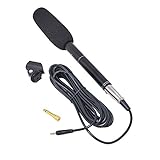
At eleven inches, this is one of the longest interference tubes you will find under $30, and the included metal holder and anti-wind foam cap mean you get a usable XLR shotgun without buying separate accessories. It is a raw tool: the capsule character is unrefined, but the length does enforce a narrower pattern than any compact mic in this price bracket.
- Pro: Long tube and included mount offer exceptional value for the price.
- Pro: XLR output integrates with any recorder or phantom-powered interface.
- Con: Build quality is a significant step below the RØDE or Sennheiser options, with rattling internals possible after heavy use.
Skip this if your recordings will be used commercially or if you need a mic that survives years of trail use.
Buying Guide
Polar Pattern and Interference Tube Length
The fundamental physics of a shotgun mic is that sound waves arriving off-axis must travel different path lengths inside the interference tube and cancel destructively at the rear port. Longer tubes enforce this cancellation more completely, producing a narrower acceptance angle. For wildlife recording where your subject may be 100 feet or more away, a tube under 20 cm will struggle to reject ambient noise from the sides. Look for true lobar designs if distance matters, and treat supercardioid labeling as a compromise that only works at shorter ranges.
Connectivity and Power Requirements
A phantom-powered XLR condenser like the Shure or Audio-Technica demands a recorder or interface that supplies 48V, which is fine if you carry a Zaxcom or Sound Devices unit but adds weight and cost if you are hiking light. Battery-powered or plug-in-powered alternatives (the Sennheiser, Movo options, RØDE) run off your camera or phone directly. Decide whether your rig philosophy is dedicated audio gear or integrated camera-first, because buying a mic that requires gear you do not own is the most common field failure.
Physical Durability and Wind Protection
Wildlife work means brushing against branches, lying in dew, and facing gusts in open meadows. Metal housings survive drops and scrapes that plastic cannot. A built-in or included foam windscreen is non-negotiable; the foam cap alone can save a recording from being destroyed by moderate breeze. For exposed wetland or alpine conditions, invest in a furry blimp windshield separately, and confirm your mic’s physical size will fit inside it before purchase.
Our Verdict
Our top pick for most serious wildlife recordists is the Audio-Technica AT897: it balances a genuinely useful interference tube length, dual power options, and XLR compatibility with a price that does not require a dedicated budget line. For the absolute lowest entry point that still delivers real directional improvement, the Movo VXR10 at under $40 is a credible first step. However, if your primary need is standalone, multi-hour field deployments without a camera in the loop, the Spy-MAX Sound Pro III is the one that wins outright because its integrated recorder and battery life solve the logistics problem no other mic on this list can.
FAQ
Do I need phantom power for wildlife recording?
Not always. Compact on-camera mics like the Sennheiser and RØDE units draw power from the camera’s plug-in power or use internal batteries. However, the highest-performing long shotguns with XLR outputs typically require 48V phantom power from a dedicated recorder or interface. Match your mic choice to the gear you already carry or are willing to add.
How far can a shotgun mic actually isolate an animal call?
Realistically, 30 to 60 feet is the range where most compact shotguns provide meaningful improvement over a camera mic. Longer pro tubes extend useful isolation to 100 feet or more, and dedicated designs like the Spy-MAX claim functional reach to 300 feet. Beyond that, a parabolic dish becomes the more effective tool because it concentrates sound onto a single element rather than relying on destructive interference.
Is a parabolic dish better than a shotgun for wildlife?
They solve different problems. A parabolic dish provides maximum gain and a very tight pattern at extreme distances, but it is bulky, difficult to aim on moving subjects, and colors frequency response. A shotgun is more versatile, easier to pair with a camera for synced video, and handles moderate distances well. Most serious recordists own both and choose based on whether the target is stationary and far or moving and mid-range.
Can I connect a shotgun microphone directly to a smartphone?
Yes, with caveats. Mics with TRRS connectors like the Sennheiser MKE 400 and Movo X1-Mini can connect directly to phones that still have a headphone jack, or via a short adapter for newer models. However, smartphone mic preamps are noisy, so you will never extract full performance from a long shotgun. For best results, pair a TRRS-capable mic with a small USB-C interface or recorder.