
Our Top Picks



Top 3 picks at a glance

The Short Answer
To determine what CPU cooler height fits your computer case, you must check your chassis manufacturer’s specifications for “CPU Cooler Clearance” or “Maximum CPU Cooler Height.” This figure represents the exact distance from the motherboard’s CPU socket to the inside of the case’s side panel.
As a golden rule of thumb, you should choose a cooler that is at least 2 to 3 millimeters (0.08 to 0.12 inches) shorter than your case’s maximum listed clearance. This safety margin prevents the heat pipes or fan clips from pressing against glass side panels, which can cause vibrations, scratches, or even catastrophic panel shattering. For example, if your mid-tower case supports a maximum cooler height of 160 mm, you should target a CPU cooler that stands 157 mm or shorter.
As an Amazon Associate we earn from qualifying purchases at no extra cost to you.

If you cannot find your case’s manual, you can calculate the clearance manually by measuring the internal width of your chassis and subtracting the motherboard standoff height (typically 6 to 8 mm) and the CPU socket stack-up (approximately 7 to 9 mm).
Standard Sizes
Computer cases and CPU coolers generally fall into standardized sizing tiers. Understanding these categories helps you quickly narrow down which hardware class is compatible with your desktop footprint. Below is a reference guide comparing common PC case form factors with their typical CPU cooler height allowances in both imperial and metric measurements.
| Case Form Factor | Typical Chassis Width | Max Cooler Height (Inches) | Max Cooler Height (cm / mm) | Recommended Cooler Type |
|---|---|---|---|---|
| Mini-ITX / Small Form Factor (SFF) | 3.5″ to 7.0″ | 1.18″ – 3.15″ | 3.0 – 8.0 cm (30 – 80 mm) | Low-profile / Top-down blowers |
| Micro-ATX Mini Tower | 7.0″ to 8.0″ | 4.72″ – 6.10″ | 12.0 – 15.5 cm (120 – 155 mm) | Compact 92mm or slim 120mm tower coolers |
| ATX Mid-Tower (Standard) | 8.0″ to 9.0″ | 5.90″ – 6.50″ | 15.0 – 16.5 cm (150 – 165 mm) | Standard 120mm or dual-tower air coolers |
| E-ATX / Full Tower | 9.0″+ | 6.50″ – 7.48″+ | 16.5 – 19.0 cm+ (165 – 190 mm+) | Massive 140mm dual-tower air coolers or liquid AIOs |
How to Measure Your Space
If you are upgrading an older pre-built PC or working with a custom case that lacks a manual, taking manual measurements is the safest way to avoid frustrating return shipping fees. Follow this step-by-step method to find your exact clearance limit:
- Step 1: Prep your workspace and safety gear. Shut down your PC, unplug the power supply, lay the computer flat on its side on a clean, non-conductive surface, and remove the main side panel.
- Step 2: Identify the measurement starting point. Locate the CPU socket on your motherboard. If there is already a processor installed, your starting point is the top surface of the CPU’s metal lid (the Integrated Heat Spreader, or IHS). If the socket is empty, start your measurement from the top edge of the plastic socket assembly.
- Step 3: Take the vertical depth measurement. Place a rigid, non-conductive ruler (plastic or wood is preferred over metal to prevent motherboard scratches) perpendicular to the motherboard. Align the zero mark with the top of the CPU’s metal lid. Measure straight up to the outer metal lip of the chassis frame where the side panel rests. Do not measure all the way to the absolute exterior of the case; you must stop where the interior surface of the glass or metal side panel will sit.
- Step 4: Subtract the safety margin. Read the measurement in millimeters or inches. Subtract 3 mm (0.12 inches) from this total. This final number is your absolute maximum safe CPU cooler height.
- Step 5: Measure your RAM height. Many modern dual-tower coolers overhang the memory slots. Measure from the motherboard PCB to the top of your RAM sticks. If your RAM module is taller than 40 mm, you may need to slide your CPU cooler’s front fan upward, which artificially increases the overall height of the cooler by several millimeters. Keep this in mind when selecting your final parts list.
By Room or Use Case
Ultra-Compact Spaces & Living Room Media Centers
If you are building a home theater PC (HTPC) or a minimalist desktop setup for a tight studio apartment, you are likely utilizing a Small Form Factor (SFF) or Mini-ITX case. In these environments, vertical space is at an absolute premium. Coolers must stay incredibly low to the motherboard to allow the case lid to close. For these tight builds, compact options like the ID-COOLING SE-903-XT V2 Black Compact CPU Air Cooler (which retails in the $12 to $16 price range) offer a highly efficient footprint. Standing at a modest height, these compact designs utilize smaller 92mm fans and direct-touch heat pipes to handle thermal loads up to 150W without colliding with your case panel or high-profile RAM modules.
The Modern Home Office & Mainstream Mid-Tower Builds
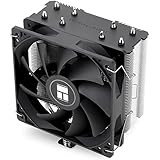
The standard mid-tower ATX case is the most popular layout for home offices, student desks, and general productivity setups. These cases generally accommodate CPU coolers ranging from 150 mm to 160 mm in height. In this category, single-tower air coolers strike the perfect balance between high thermal efficiency and easy installation. A prime example is the Thermalright Assassin X120 Refined SE CPU Air Cooler, which operates in the budget-friendly $16 to $22 price bracket. With a physical height of approximately 148 mm, this single-tower cooler comfortably fits almost every standard mid-tower chassis on the market while leaving ample room for airflow. Its 120mm PWM fan and four direct-touch copper heat pipes ensure quiet operation, making it ideal for quiet work-from-home environments.
Dedicated Gaming Rooms & High-Performance Workstations
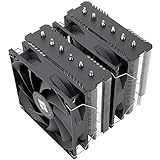
For demanding tasks like heavy 3D rendering, video editing, or high-frame-rate gaming, processors run significantly hotter. These systems require heavy-duty cooling solutions housed in spacious mid-tower or full-tower enclosures. If your case has at least 155 mm to 165 mm of vertical clearance, you can upgrade to a dual-tower cooler. The Thermalright Peerless Assassin 120 SE CPU Cooler, typically priced between $32 and $38, is a class-leading option for high-end thermal performance. Standing at 155 mm tall, this powerhouse features six high-performance heat pipes and dual 120mm fans. It delivers cooling performance comparable to expensive liquid loops while maintaining a physical size that fits snugly inside mainstream gaming cases, provided you have verified your clearance beforehand.
Ergonomic Under-Desk & Floor-Based Setups
Often overlooked in size guides is how the physical location of your PC case affects its overall thermal performance and cooling efficiency. If you keep your PC under your desk or on the floor to save precious desktop work surface, dust accumulation increases significantly, which chokes your CPU cooler. Incorporating mobile accessories like the Hovadova Adjustable PC Tower Stand with Cooling Fans (ranging from $30 to $36) helps elevate your computer tower off carpeted surfaces. This adjustable stand not only keeps your system cleaner but also integrates built-in active cooling fans underneath the chassis. This setup feeds fresh air directly into the bottom intake of your case, allowing your internal CPU cooler to run quieter and more efficiently, regardless of its height.
Common Sizing Mistakes
Even experienced system builders can make simple oversights when configuring their PC cooling setups. Avoid these four common traps during your planning phase:
- Relying solely on external case dimensions: Never assume that because a case is listed as 8 inches (203 mm) wide, it can fit a 170 mm tall cooler. Internal layouts require space for cable management behind the motherboard tray (often 15 to 25 mm), motherboard standoffs, the motherboard PCB itself, and the CPU socket assembly. Always look for the specific “interior CPU clearance” rating rather than the external chassis width.
- Ignoring RAM clearance and fan shifting: Many premium air coolers overhang the RAM slots. If you purchase high-profile RGB memory, you will be forced to clip the front fan of your CPU cooler higher up on the aluminum fins to clear the memory modules. This simple adjustment can add 5 mm to 15 mm to the total height of your cooler, suddenly making a compatible cooler too tall for your side panel to close.
- Neglecting motherboard VRM heatsink heights: Modern high-end motherboards feature massive, stylized aluminum heatsinks around the CPU socket to cool the voltage regulator modules (VRMs). Some wide-profile or low-profile top-down coolers can collide with these heatsinks, forcing the cooler to sit unevenly or preventing installation entirely.
- Forgetting the thickness of sound-dampening material: If you are building a silent PC using a case with sound-proofing foam adhered to the inside of the side panel, remember that this foam can reduce your effective CPU cooler clearance by 2 mm to 5 mm. Make sure to subtract this thickness from your case’s advertised limits.
FAQ
How much clearance should I leave between the CPU cooler and the side panel?
You should aim for a minimum clearance gap of 2 mm to 3 mm (about 0.1 inches). Leaving this tiny pocket of air prevents the metal tips of the cooler’s heat pipes from physically touching the side panel. If there is direct contact, the vibrations from the spinning CPU fan will transfer to your case, resulting in an annoying, persistent rattling noise or potentially cracking a tempered glass side panel.
Does RAM height affect what CPU cooler height fits my case?
Yes, RAM height plays a major role in dual-tower and large single-tower air coolers. If your RAM modules are taller than standard low-profile memory (usually 32 mm to 35 mm), the cooler’s fan must be mounted higher up on the heatsink structure to clear the RAM. This action increases the overall height of the cooler assembly, which may cause it to hit your case’s side panel even if the heatsink itself technically meets the case specs.
Can I use an external PC stand to help with cooling and space?
Yes. Utilizing an elevated, ventilated system like the Hovadova Adjustable PC Tower Stand with Cooling Fans can significantly optimize your system’s overall thermal performance. By raising your PC tower several inches off the floor or carpet, you dramatically reduce dust intake and improve bottom-to-top airflow. This keeps your internal CPU cooler cleaner, allowing it to maintain lower temperatures without needing a taller, louder heatsink.
What happens if I buy a CPU cooler that is too tall for my case?
If your CPU cooler exceeds your case’s clearance limits, you will not be able to reinstall your side panel. Operating a PC with an open side panel exposes your sensitive electronic components to rapid dust buildup, pet hair, and accidental spills or physical impacts. As we look ahead to 2026, PC chassis designs are offering more flexible interior layouts, but physical clearance remains an absolute boundary; if a cooler is too tall, your only options are to return the cooler, run the system without a side panel, or buy a wider case.
Related guides
- Best Gaming PC for Overwatch 2: Ten Prebuilts Matched to Your Monitor (2026)
- Best Gaming PC for Baldur’s Gate 3: Matching CPU, VRAM and Storage to the Game (2026)
- Best Gaming PC for Apex Legends: Which Listings Fit a High-Refresh Setup (2026)
- Best RTX 3060 Gaming PCs: Eight Prebuilt Listings Compared by CPU, RAM and Cooling (2026)









