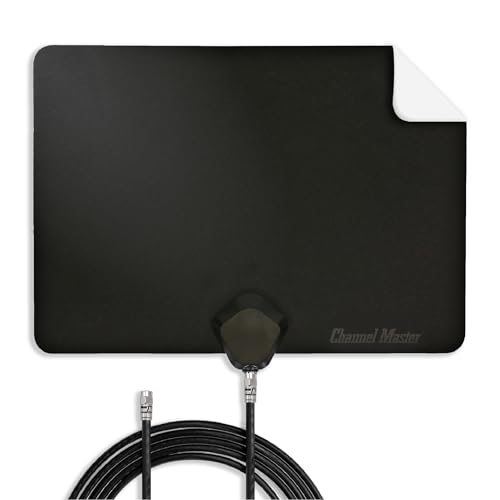
The best digital TV antenna indoor for most cord-cutters is the Channel Master FLATenna because its established flat-panel design, included 12-foot coaxial cable, and straightforward indoor installation make it a sensible choice for viewers who want local broadcast channels without paying for exaggerated range claims. It is especially well suited to apartments, bedrooms, offices, and homes located within reasonable distance of broadcast towers. Buyers on a tighter budget should look first at the HIDB or DAANT indoor antennas, while the UltraPro Hover is a practical alternative when a compact, inexpensive setup matters most. The intelbras models are better considered when brand familiarity and a mid-range category position are more important than headline range numbers. Yougreast and Qboy use premium positioning and very large advertised range figures, but those figures should not be treated as literal indoor reception distances.
The right choice depends less on a printed “miles” number than on tower distance, building materials, antenna placement, the broadcast band used by nearby stations, and whether the antenna needs an amplifier. An indoor antenna can receive free over-the-air television only when the local signal reaches the room with enough strength and quality. This guide compares all eight listed products, explains the practical differences between them, and gives a situation-by-situation recommendation.
Our Top Picks


Top 3 picks at a glance
Quick Comparison
| Product | Best for | Key specs and category details | Price tier |
|---|---|---|---|
| HIDB TV Antenna for Smart TV Indoor | Low-cost first antenna | Indoor digital antenna for local channels and smart TVs; simple flat indoor format | Budget |
| intelbras TV Antenna for Smart TV Indoor | Brand-conscious buyers | Indoor digital antenna for local channels; smart-TV compatible category; mid-range positioning | Mid-range |
| Yougreast 2026 Upgraded TV Antenna | Buyers seeking premium positioning | Indoor antenna for local channels; listing advertises 3200+ miles; treat range as a marketing maximum, not a guaranteed distance | Premium |
| DAANT TV Antenna Indoor Long Range | Affordable long-range attempt | Indoor long-range digital antenna for local channels; suitable for a low-cost placement experiment | Budget |
| Qboy 2026 Digital TV Antenna | Headline-feature shoppers | Indoor HD antenna for local channels; listing advertises 6000+ miles; actual performance depends on signal conditions | Premium |
| UltraPro Hover Digital TV Antenna | Compact, inexpensive setups | Indoor digital antenna for smart TVs; local-channel reception category; compact placement-oriented design | Budget |
| Channel Master FLATenna | Best overall balance | Indoor digital HDTV antenna with included 12-foot coaxial cable; flat-panel design and established antenna-brand positioning | Mid-range |
| intelbras TV Antenna Indoor for Local Channels | Alternative intelbras configuration | Indoor digital antenna for local channels and smart TVs; mid-range positioning | Mid-range |
How We Chose
This roundup is based on the information conveyed by each product listing, the established behavior of indoor television antennas, and the practical factors that determine whether an antenna is a sensible fit. The comparison prioritizes stated purpose, antenna form factor, included accessories when clearly identified, brand/category context, setup flexibility, and the usefulness of each product for a specific type of buyer. It does not treat a large advertised mileage figure as proof of reception performance.
We also considered upgrade paths. A model with a longer cable can be easier to position near a window; a low-cost antenna can be a reasonable first experiment before buying a powered model or outdoor antenna; and a recognized flat-panel category can simplify replacement or troubleshooting. Since indoor reception varies sharply by address, terrain, tower direction, walls, wiring, and nearby interference, no product is assigned a universal channel count or guaranteed distance. The recommendations are therefore organized by use case rather than by an unsupported performance ranking.
1. Channel Master FLATenna – Best for the most balanced indoor setup
As an Amazon Associate we earn from qualifying purchases at no extra cost to you.
The Channel Master FLATenna is the strongest all-around choice in this group for shoppers who want a conventional indoor HDTV antenna from a recognizable antenna-focused brand. Its listing identifies it as an indoor digital HDTV antenna and specifically includes a 12-foot coaxial cable. That cable is more than a minor accessory: indoor reception often improves when the antenna can be moved away from the television, placed higher on a wall, or positioned beside a window. A short cable can force the antenna into the least favorable location in the room.
The FLATenna’s flat-panel format also suits modern rooms. It can be placed discreetly behind or beside a television, mounted on a wall, or moved during a channel scan. The design is aimed at receiving local broadcast channels rather than delivering cable channels or streaming services. It cannot create reception where the building blocks the signal, but it offers a sensible starting point for homes within usable indoor coverage.
- Product class: indoor digital HDTV antenna.
- Form factor: flat indoor antenna.
- Included accessory: 12-foot coaxial cable, according to the listing.
- Best installation locations: high on a wall, near a window, or on the side of the room facing the broadcast towers.
- Signal expectation: dependent on local tower distance, terrain, walls, and interference rather than a universal mileage guarantee.
Strengths: The cable length gives it more placement flexibility than an antenna that must sit directly beside the television. The flat design is easy to hide and works well in apartments, bedrooms, and offices. Channel Master’s established focus on antenna products is also useful for buyers who prefer a conventional category specialist over a listing built mainly around an extreme range claim.
Pros
- Includes a useful 12-foot coaxial cable.
- Flat form factor is easy to position discreetly.
- Good fit for a first serious indoor antenna purchase.
- Clearer practical value than an indoor antenna judged only by an exaggerated range number.
Cons
- Indoor placement may still be inadequate in a shielded or remote location.
- A passive indoor antenna cannot compensate for severe signal loss.
- Buyers wanting a very small antenna may prefer a more compact design.
- The cable may need routing or securing along a wall.
The nearest alternatives are the mid-range intelbras models. They occupy a similar broad category, but the FLATenna has a clearly stated 12-foot cable that makes placement easier to evaluate. Compared with the budget HIDB and DAANT models, it costs more in category terms but offers a more deliberate installation path. Compared with the premium Yougreast and Qboy antennas, it avoids making an extreme advertised range the center of the decision. Choose the FLATenna when you want the most balanced combination of practical placement, recognizable product category, and straightforward expectations.
2. HIDB TV Antenna – Best for a low-cost first attempt
The HIDB TV Antenna for Smart TV Indoor is a sensible budget starting point for someone who has never tried free over-the-air television and wants to test reception before spending more. The listing describes it as an indoor digital TV antenna for smart TVs and local channels. That makes its intended role clear: connect the antenna to the television’s antenna input, select the television’s broadcast or antenna mode, and run a channel scan.
Its main advantage is not a special technical feature but low financial risk. Indoor reception is highly address-specific, so even a well-designed antenna can disappoint if a home sits behind dense construction, below surrounding terrain, or far from transmitters. A budget antenna lets a viewer test the room, window, and direction before deciding whether the problem is the product or the location. If several placements produce only a few channels, buying another similar flat indoor antenna may not solve the underlying issue.
- Product class: budget indoor digital TV antenna.
- Intended devices: smart TVs and televisions with a standard antenna input.
- Intended channels: local over-the-air digital broadcasts.
- Best use: an inexpensive reception experiment in an apartment, bedroom, or nearby-tower area.
- Important limitation: the television must have a compatible tuner, and local signal conditions determine the result.
Strengths: The HIDB is easy to understand and inexpensive to try. It is appropriate for viewers who do not need a specialized installation and who can place the antenna near an exterior wall or window. Its smart-TV description refers to compatibility with the television, not to streaming apps; the antenna itself receives broadcasts and does not replace an internet connection.
Pros
- Budget-friendly way to test over-the-air reception.
- Designed for indoor use and local channels.
- Suitable for a basic smart-TV installation.
- Good choice when the broadcast towers are relatively close.
Cons
- No indoor antenna can guarantee reception at every address.
- Budget construction may offer less installation flexibility than a model with a long included cable.
- It may not be the right solution for heavy walls or difficult terrain.
- Repeated rescanning will not fix a poorly placed antenna.
The closest alternatives are the DAANT and UltraPro Hover, both also budget-oriented. The HIDB is the safest pick when the goal is simply to spend as little as possible on a first trial. DAANT is more attractive to buyers drawn to long-range wording, while UltraPro Hover is a better fit when compact placement is the priority. Compared with the Channel Master FLATenna, the HIDB is the economical option, but the FLATenna’s stated 12-foot cable gives it a stronger argument for difficult indoor placement. Choose HIDB for a nearby-signal, low-risk setup rather than expecting it to overcome structural obstacles.
3. Yougreast 2026 Upgraded TV Antenna – Best for premium-positioned feature shopping

The Yougreast 2026 Upgraded TV Antenna is positioned as a premium indoor digital antenna for smart TVs and local channels. Its listing advertises a 3200+ mile range. That figure should be read as a headline marketing maximum, not as a realistic indoor distance from a transmitter. Broadcast signals do not normally become usable thousands of miles away because of an antenna label; curvature, transmitter power, terrain, frequency, and atmospheric conditions impose physical limits.
Even so, the product can appeal to buyers who want an upgraded-looking option and prefer a premium category before moving to an outdoor antenna. It is most defensible for viewers who understand that the useful question is not “does it reach 3200 miles?” but “can its placement and design receive the channels available at my address?” The antenna is intended for local broadcasts, so the local signal environment remains decisive.
- Product class: premium-positioned indoor digital antenna.
- Listed purpose: smart-TV compatibility and local-channel reception.
- Advertised range: 3200+ miles; not a guaranteed practical indoor coverage distance.
- Best buyer: someone seeking an upgraded premium listing and willing to judge results by a channel scan.
- Best evaluation method: compare reception in several room locations before deciding whether the antenna is adequate.
Strengths: The listing makes its upgraded positioning obvious and directly targets the common indoor-antenna use case. It may be attractive to shoppers who want more than the most basic budget option. Its intended connection is also uncomplicated: the television must provide an antenna input, and the user must select the broadcast tuner during setup.
Pros
- Premium-positioned option for local-channel reception.
- Explicitly aimed at smart TVs and indoor installation.
- Useful for buyers who want an upgraded category rather than a basic trial product.
- Its advertised range makes it easy to identify, although it should not be taken literally.
Cons
- The 3200+ mile claim is not a realistic indoor-distance guarantee.
- Premium pricing does not remove the effects of walls, terrain, or tower direction.
- Exact reception capabilities should not be inferred from the listing title alone.
- Viewers in weak-signal homes may need an attic or outdoor antenna instead.
The nearest alternative is the Qboy 2026 Digital TV Antenna, which uses an even larger advertised range figure. Both are premium-positioned products whose range claims should be treated cautiously. Yougreast is the more restrained choice of the two because 3200+ miles is still a marketing maximum, while Qboy’s 6000+ mile wording is even less useful as a practical comparison. The Channel Master FLATenna is the better value-oriented alternative for buyers who prioritize a specified cable and conventional installation. Choose Yougreast when premium positioning matters, but make room placement—not the number in the title—the deciding test.
4. DAANT TV Antenna – Best for a budget long-range experiment

The DAANT TV Antenna Indoor Long Range is aimed at buyers who want an inexpensive indoor antenna while still looking for a product described as long range. Its listing identifies it as an indoor antenna for local digital television, so its practical role is similar to other flat or compact indoor antennas: connect it to the television, place it where the signal is strongest, and run a full scan.
The “long range” label can be useful as a description of intended positioning, but it cannot guarantee a particular number of miles. Indoor antennas receive the signal that reaches the room; they do not function like a high-mounted outdoor array. A DAANT antenna can be a worthwhile experiment when towers are reasonably nearby and the building has relatively low signal loss. It is less likely to be a satisfying answer for a basement television, a home surrounded by hills, or a room with foil-backed insulation and metal framing.
- Product class: budget indoor digital antenna.
- Stated positioning: long-range indoor use for local channels.
- Best installation: elevated placement near a window or exterior-facing wall.
- Best buyer: a budget shopper who wants to try a long-range-labeled model before spending more.
- Core limitation: actual reception is controlled by signal strength and quality at the antenna location.
Strengths: DAANT is a logical choice for someone who wants more deliberate long-range positioning than a generic low-cost antenna while keeping the initial purchase in the budget class. It can work well as a controlled experiment: try one room, then move it higher and closer to a window before concluding that reception is poor. That process gives more useful information than immediately switching products.
Pros
- Budget option for local over-the-air channels.
- Long-range positioning may appeal to viewers outside strong urban coverage.
- Indoor installation avoids roof work and outdoor weather exposure.
- Appropriate as a first test where an outdoor antenna is not yet justified.
Cons
- “Long range” does not establish a guaranteed mileage.
- Indoor placement remains vulnerable to walls and interference.
- It may not solve reception problems caused by terrain or distance.
- Buyers may need a longer cable or separate placement solution depending on the room.
DAANT’s nearest alternatives are the HIDB and UltraPro Hover. HIDB is the simpler budget choice when the buyer wants the lowest-risk trial, while UltraPro Hover may be preferable where physical size is the main concern. DAANT is the better match for a shopper who specifically wants a long-range-labeled product but understands the label as a category description rather than a promise. The Channel Master FLATenna remains the stronger alternative when a long included cable and established flat-panel format matter more than budget.
5. Qboy 2026 Digital TV Antenna – Best for buyers attracted to maximum advertised range

The Qboy 2026 Digital TV Antenna is a premium-positioned indoor HD antenna for local channels. Its listing advertises a 6000+ mile range, which is best understood as a marketing headline rather than a physically dependable indoor coverage specification. No indoor antenna can promise that a television will receive usable broadcasts from thousands of miles away. The practical factors are transmitter location, frequency, terrain, building construction, cable loss, and interference.
Qboy may still suit a buyer who wants a feature-forward premium listing and is prepared to evaluate it sensibly. The right test is to connect it directly to the television, place it near a window or exterior wall, run the television’s automatic channel scan, and then repeat the scan only after changing location. If the signal quality is unstable in every position, the issue may be the address rather than the product.
- Product class: premium indoor HD/digital TV antenna.
- Stated use: local channels and smart-TV-compatible indoor reception.
- Advertised range: 6000+ miles; not a realistic guarantee for indoor terrestrial reception.
- Best buyer: a shopper who values premium positioning and understands how to verify reception locally.
- Recommended approach: use antenna placement and scan results as the decision criteria.
Strengths: The product is clearly targeted at viewers who want a premium-looking solution for local HD broadcasts. It is relevant to smart-TV owners who want to add free terrestrial channels without an outdoor installation. Its title also makes the intended use obvious, which can reduce confusion between an antenna and a streaming accessory.
Pros
- Premium-positioned indoor option.
- Designed for local digital and HD broadcast channels.
- Suitable for buyers who want a feature-heavy listing.
- Can be evaluated without installing equipment on a roof.
Cons
- The 6000+ mile claim should not be used to predict real reception.
- Premium pricing cannot overcome a weak signal at the wall outlet.
- Indoor reception can vary substantially from one room to another.
- Exact performance details should be confirmed from the current listing rather than inferred from the title.
The closest comparison is Yougreast, another premium-positioned antenna with a very large mileage claim. Qboy is the more extreme headline option, while Yougreast is slightly less aggressive in its advertised figure. Buyers who want practical installation value should instead consider the Channel Master FLATenna and its stated 12-foot cable. Qboy is appropriate only when the buyer is comfortable separating marketing language from engineering reality and will judge the purchase by actual local channel stability.
6. UltraPro Hover Digital TV Antenna – Best for compact budget installations

The UltraPro Hover Digital TV Antenna Indoor for Smart TV is a budget-oriented choice for viewers who want a compact indoor setup for local channels. The listing emphasizes indoor digital television and smart-TV compatibility, making it suitable for a bedroom, office, guest room, or secondary television where the antenna should not dominate the wall.
Compactness is useful, but it creates a trade-off. A small antenna is easier to hide and may fit in a narrow area, yet placement still matters more than appearance. If the television is on an interior wall, moving the antenna toward a window can improve reception even when the antenna itself is unchanged. A compact model is therefore best when the room already has a favorable signal path or when the viewer has flexibility to relocate it during setup.
- Product class: budget indoor digital antenna.
- Stated purpose: local channels and smart-TV use.
- Installation priority: compact, discreet placement with a clear path toward broadcast towers.
- Best buyer: a viewer who values small size and low cost over premium positioning.
- Signal caveat: compact size does not eliminate building attenuation or terrain problems.
Strengths: The UltraPro Hover is easy to recommend for secondary rooms where the television is close to a window or an exterior wall. It is also a logical option for renters who do not want a conspicuous installation. The product category is simple: it receives local broadcasts and does not require a streaming subscription for those channels that are actually receivable.
Pros
- Budget-friendly compact indoor design.
- Good fit for bedrooms, offices, and secondary televisions.
- Designed for smart-TV and local-channel use.
- Discreet form factor can be easier to live with than a larger installation.
Cons
- Compact placement may be less forgiving in a weak-signal room.
- The listing name alone does not establish a guaranteed range.
- May require experimentation with height and window position.
- Not a substitute for an attic or outdoor antenna in difficult coverage areas.
Its nearest alternatives are HIDB and DAANT. HIDB is the more general low-cost first try, whereas UltraPro Hover is the better pick when physical size is the key requirement. DAANT is more attractive to shoppers specifically seeking long-range wording. The Channel Master FLATenna is the upgrade path when placement flexibility matters, particularly because its listed 12-foot coaxial cable can move the antenna farther from the TV. Choose UltraPro Hover for a favorable room and a clean, compact installation.
7. intelbras TV Antenna – Best for a mid-range brand-focused purchase

This intelbras TV Antenna for Smart TV Indoor is a mid-range indoor digital antenna for local channels. Its listing does not need an extreme range claim to communicate its intended use: it is designed to connect to a compatible television and receive terrestrial broadcasts inside the home. That makes it a suitable option for buyers who prefer a recognizable brand-oriented purchase over a product chosen mainly for a large number in the title.
As with every indoor antenna, the room and address remain decisive. A mid-range product may offer a better overall ownership proposition, but it cannot turn a blocked or very weak broadcast path into a reliable signal by itself. The best installation is usually high and near an exterior wall or window, with the antenna oriented toward the local transmitters when the design permits directional placement.
- Product class: mid-range indoor digital antenna.
- Intended devices: smart TVs and compatible televisions with antenna inputs.
- Intended reception: local over-the-air digital channels.
- Best buyer: a viewer who values brand familiarity and a middle-ground price tier.
- Placement advice: test near a window and avoid routing the antenna beside noisy electronics.
Strengths: The intelbras model provides a less speculative choice for buyers who do not want to compare exaggerated range claims. Its mid-range position can make sense when a household wants a primary-room antenna but does not need a premium-positioned product. It also fits a conventional setup with a television tuner, coaxial connection, automatic scan, and local channel list.
Pros
- Mid-range option with a clear indoor local-channel purpose.
- Brand-focused alternative to extreme range marketing.
- Suitable for smart-TV installations that include an antenna input.
- Good fit for a main room with reasonably usable broadcast signals.
Cons
- The listing does not by itself guarantee a particular channel count.
- Indoor construction and terrain limitations still apply.
- May not offer the placement flexibility of the Channel Master’s stated 12-foot cable.
- Buyers should verify connection and accessory details before purchase.
The closest competitors are the other intelbras model and the Channel Master FLATenna. The two intelbras listings share a broad mid-range purpose, but their names indicate different listing configurations; check the current product details to confirm the exact included accessories. FLATenna has the clearer cable advantage and is the better recommendation for difficult placement. Compared with budget HIDB or UltraPro Hover, intelbras is for buyers who want a more considered middle-tier purchase. Compared with premium Yougreast or Qboy, it is less dependent on headline range claims.
8. intelbras TV Antenna Indoor – Best for a second mid-range configuration

This second intelbras listing is an indoor digital antenna for local channels and smart TVs, positioned in the mid-range tier. It belongs in the comparison because shoppers may encounter both intelbras products while searching for the best digital TV antenna indoor. The shared brand and broad category do not mean the listings are interchangeable in every accessory or physical detail, so buyers should compare the current listing information before selecting one.
The most sensible reason to choose this model is a preference for a straightforward indoor antenna from a known brand category rather than a premium product promising thousands of miles. It is appropriate for an apartment, home office, bedroom, or living room with an accessible window and moderate local signal. It is less appropriate to treat it as an automatic fix for channels that disappear behind concrete, metal, foil-backed insulation, or steep terrain.
- Product class: mid-range indoor digital antenna.
- Stated use: local channels and smart-TV connection.
- Best placement: a high position near an exterior-facing wall or window.
- Best buyer: someone comparing mid-range brand options and wanting a conventional setup.
- Verification point: check cable, amplifier, mounting, and connector details in the live listing.
Strengths: Its purpose is clear and realistic: receive local digital broadcasts indoors. The mid-range positioning gives buyers an alternative to both very inexpensive trial antennas and premium products whose headline claims are difficult to interpret. It can be a good choice when the main television is already in a room with a favorable signal path.
Pros
- Clear indoor local-channel purpose.
- Mid-range alternative to budget and premium options.
- Suitable for compatible smart TVs and standard antenna inputs.
- Brand-focused choice for shoppers who value consistency.
Cons
- Exact differences from the other intelbras listing should be checked before ordering.
- No indoor model guarantees reception at every address.
- May need careful placement to avoid dropouts.
- It may not include the same long cable specified for the Channel Master FLATenna.
The nearest alternative is the first intelbras model in this roundup. Since both occupy the same brand and price category, the decisive difference should be current accessory and physical-design information, not the product title alone. The FLATenna is easier to recommend when a 12-foot cable is valuable; HIDB is the cheaper experimental option; and Yougreast or Qboy are for shoppers drawn to premium positioning. Choose this intelbras configuration when its exact listing details better match the room and television than the alternatives.
How to Choose
Choosing the best digital TV antenna indoor is primarily a signal-path decision. The antenna must receive enough usable broadcast energy at its physical location for the television tuner to decode the channel. A model with a dramatic range number can still fail behind a reinforced-concrete wall, while a simple indoor antenna can work well near a window in a strong-signal neighborhood.
Start with the broadcast location, not the product title
Identify the local transmitter direction and approximate distance using a reputable broadcast coverage map or local station information. The most useful categories are strong urban coverage, moderate suburban coverage, fringe coverage, and difficult terrain or obstruction. Indoor antennas are most predictable in the first two categories. Fringe locations may work from an upper-floor window but fail on a lower floor, and difficult terrain may require an attic or outdoor antenna.
Do not interpret “HD,” “digital,” or “smart TV” as evidence of superior range. Digital television is a transmission format, while smart-TV compatibility usually means the television has the correct antenna connector and tuner. The antenna does not provide internet access, streaming apps, or subscription channels.
Use a placement-first decision matrix
| Your situation | Best starting choice | Why | Likely next step if reception fails |
|---|---|---|---|
| Strong signal, small room, lowest cost | HIDB | Low-risk indoor trial | Move near a window and rescan |
| Strong or moderate signal, compact installation | UltraPro Hover | Budget-oriented discreet format | Raise the antenna or use an exterior-facing wall |
| Moderate signal and need for placement flexibility | Channel Master FLATenna | Stated 12-foot coaxial cable | Try several window and wall positions |
| Moderate signal, brand-focused purchase | Either intelbras model | Mid-range conventional category | Confirm accessories and test the highest placement |
| Budget shopper attracted to long-range wording | DAANT | Affordable long-range-labeled experiment | Compare antenna position before changing products |
| Premium-positioned buyer who understands range claims | Yougreast | Upgraded premium category | Consider an attic or outdoor antenna if all indoor positions fail |
| Buyer focused on the largest headline range | Qboy | Premium 6000+ mile listing claim | Ignore the headline and evaluate actual channel stability |
Understand what “range” can and cannot tell you
A range number is not a standard engineering measurement across consumer antenna listings. It may omit terrain, transmitter power, frequency, line-of-sight, building loss, and whether the antenna is indoors or outdoors. It also does not tell you whether the antenna behaves well on both lower VHF and UHF frequencies. For that reason, the 3200+ mile Yougreast and 6000+ mile Qboy claims should not be used to rank them against Channel Master, HIDB, DAANT, UltraPro Hover, or intelbras by literal distance.
Use range wording only as a rough signal of the seller’s intended audience. “Long range” suggests the buyer may be outside the strongest urban area; it does not remove the need for good placement. If the desired stations are genuinely far away or separated by hills, an outdoor or attic antenna is usually a more meaningful upgrade than moving from one similarly sized indoor model to another.
Choose the right room
Try the highest practical location in the room, preferably close to a window or exterior wall. Avoid placing the antenna behind a large metal television, inside a cabinet, directly beside a Wi-Fi router, next to a power strip, or behind dense electronics. These objects do not always block reception, but they can complicate troubleshooting and introduce local interference.
A window facing the broadcast towers is generally preferable to a window facing away from them. In an apartment, an upper floor often has a better path than a basement or ground-level interior room. If one television receives channels reliably and another does not, compare the room locations before blaming the antenna.
Account for cable length and signal loss
Coaxial cable introduces loss, especially at higher broadcast frequencies, but the practical issue with a short cable is often placement rather than attenuation. A 12-foot cable, such as the one identified with the Channel Master FLATenna, lets you move the antenna to a better wall or window. If the extra cable is unnecessary, coil it loosely rather than sharply bending it.
Do not automatically add a powered amplifier. An amplifier can help compensate for cable loss or distribute one antenna signal to several televisions, but it cannot reconstruct a signal that is absent or badly corrupted. In a strong-signal area, excessive amplification can overload the tuner and make reception worse. Test the passive setup first when possible.
Use a repeatable setup and scan process
- Connect the coaxial cable directly from the antenna to the television’s antenna or RF input.
- Open the television’s setup menu and select “Antenna,” “Air,” or “Broadcast,” not “Cable.”
- Run a complete automatic channel scan.
- Record which channels appear and whether the picture is stable.
- Move the antenna to a higher position, a window, or another exterior-facing wall.
- Run the complete scan again after each meaningful position change.
- Compare stable channels, not just the total number found once.
The reason for rescanning after a move is that the television stores channels based on the signal available during the scan. Simply moving the antenna without rescanning may leave the channel list unchanged and create the impression that placement had no effect. Conversely, a single brief scan may find a marginal channel that later drops out, so stability matters more than the maximum count.
Know when an indoor antenna is the wrong category
Switch categories when the strongest indoor position produces missing major stations, repeated pixelation, or large changes in reception with small movements. A window-mounted indoor model may still work, but a roof, attic, or exterior antenna has greater height and usually a clearer path. That is a physical upgrade, not merely a premium-price upgrade.
Homes with metal siding, foil-backed insulation, reinforced concrete, tinted energy-efficient windows, steep hills, or dense high-rise surroundings face additional loss. In those cases, a low-cost HIDB or UltraPro can still be worth trying, but the purchase should be treated as a diagnostic step. If it fails everywhere, buying Qboy or Yougreast solely because of their mileage claims is unlikely to address the root cause.
Consider the television and household layout
Confirm that the television has a terrestrial tuner and a coaxial RF input. Some displays are monitors rather than televisions, and some imported devices use different broadcast standards or tuners. A smart operating system does not guarantee that the television includes an antenna tuner.
For one television, connect the antenna directly first. For multiple televisions, a splitter can reduce signal available to each output, and long cable runs add further loss. If the same antenna must feed several sets, an appropriate distribution amplifier may help, but it should be added after confirming that the antenna receives a stable signal at its original connection.
Budget by problem, not by marketing tier
A budget antenna is sensible for a strong-signal room and for first-time testing. The HIDB, UltraPro Hover, and DAANT all fit that role, with DAANT appealing to buyers who specifically want long-range wording. Mid-range options such as Channel Master FLATenna and the intelbras listings make more sense when placement, brand context, or a primary-room installation matters. Premium-positioned Yougreast and Qboy may appeal to feature-focused shoppers, but premium positioning should never be confused with a guaranteed signal improvement.
A useful rule is to spend first on placement, then on category. If the antenna is trapped behind the television, a longer cable or better room position may help more than a new antenna. If every indoor position fails, spend on height or an outdoor solution rather than repeatedly buying indoor products.
Frequently Asked Questions
What is the best digital TV antenna indoor overall?
The Channel Master FLATenna is the best overall balance in this list because it is a conventional flat indoor HDTV antenna and its listing specifies a 12-foot coaxial cable. The cable gives the buyer more freedom to position the antenna away from the television. It is not a guarantee of reception in difficult terrain or heavily shielded buildings.
Do smart TVs need a special digital antenna?
No special “smart” antenna is required. The television needs a compatible terrestrial tuner and antenna input, while the antenna needs to be connected and followed by an antenna-mode channel scan. Smart-TV features and internet streaming are separate from over-the-air reception.
Are 3200-mile and 6000-mile antenna claims realistic?
They should not be treated as literal indoor reception distances. The Yougreast and Qboy listing numbers are marketing maximums, while real reception depends on transmitter power, terrain, frequency, building materials, and antenna placement. Use stable local channel reception as the meaningful measure.
Where should I put an indoor TV antenna?
Start high on a wall near a window or exterior-facing wall, ideally on the side of the home facing the broadcast towers. Keep it away from cabinets, large metal objects, and dense electronics when possible. Rescan after each meaningful placement change.
Why does my TV find channels but show a pixelated picture?
The tuner is finding a marginal signal that is not stable enough to decode consistently. Move the antenna higher or closer to a suitable window, check that the coaxial connector is fully seated, and run another complete scan. If all reasonable indoor positions behave the same way, the location may need an attic or outdoor antenna.
Should I buy an amplified antenna?
Amplification can help with cable loss or multiple televisions, but it cannot create a missing broadcast signal. In a strong-signal area, an amplifier can even overload the tuner. Establish stable reception with the simplest direct connection before adding amplification.
Is a more expensive indoor antenna always better?
No. Price tier does not override signal physics, and premium listings may emphasize range numbers that are not standardized. A budget antenna placed near a favorable window can outperform a premium antenna trapped behind a television or interior wall.
How many channels will these antennas receive?
There is no reliable universal channel count for any of the listed models. The result depends on the stations broadcasting in your area, tower distance, terrain, frequency bands, building construction, and placement. A complete scan in the intended room is the most useful local test.
Final Recommendations by Reader Situation
Choose the Channel Master FLATenna for the best overall balance and for rooms where the included 12-foot coaxial cable can improve placement. Choose HIDB when you want the least expensive first experiment, UltraPro Hover when compactness matters, and DAANT when you want a budget model described as long range. Choose either intelbras listing for a mid-range, brand-focused conventional setup, checking the current accessory details before deciding between them. Choose Yougreast or Qboy only if premium positioning appeals to you and you are prepared to judge the antenna by stable local reception rather than its advertised mileage. If every indoor placement fails, stop upgrading indoor models and consider an attic or outdoor antenna.
Related guides
- Best Gaming PC for Overwatch 2: Ten Prebuilts Matched to Your Monitor (2026)
- Best Gaming PC for Baldur’s Gate 3: Matching CPU, VRAM and Storage to the Game (2026)
- Best Gaming PC for Apex Legends: Which Listings Fit a High-Refresh Setup (2026)
- Best RTX 3060 Gaming PCs: Eight Prebuilt Listings Compared by CPU, RAM and Cooling (2026)