Nobara Linux is a Fedora-based distribution built specifically to remove the manual setup work that normally stands between installing Linux and actually gaming on it. Instead of hunting down codecs, configuring NVIDIA drivers by hand, and installing Proton-GE yourself, Nobara ships with most of that already handled. It’s a strong fit if you want Fedora’s stability and package quality without doing the gaming-specific configuration work solo, and a weaker fit if you want the newest Mesa or kernel the same week it lands, which is where Arch-based options pull ahead.
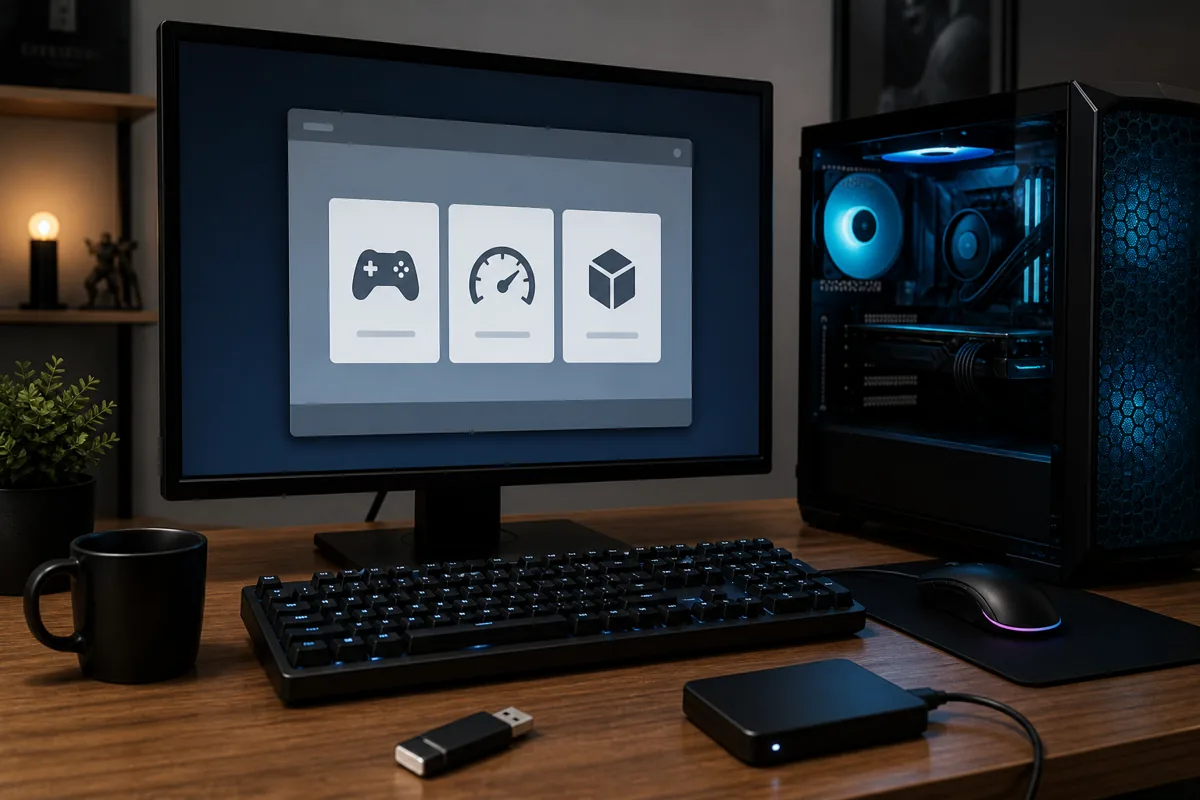
Top 3 picks at a glance


Quick answer
Install Nobara if you want a Fedora-based system that’s already configured for gaming out of the box and you’re comfortable with Fedora’s point-release update model rather than a rolling one. Skip it if you specifically want the bleeding-edge package freshness of a rolling-release distro, or if you need an immutable, easy-rollback base for a handheld or living-room build, which is where an atomic option fits better.
As an Amazon Associate we earn from qualifying purchases at no extra cost to you. Product prices and availability are accurate as of the date shown and are subject to change.


| Factor | Nobara | Plain Fedora |
|---|---|---|
| Gaming setup | Pre-configured: codecs, drivers, Proton-GE | Manual setup required |
| Update model | Fedora point-release cadence | Fedora point-release cadence |
| Best for | Gamers who want less setup work | Users who want the unmodified upstream base |
| Maintainer | Community project, gaming-focused | Red Hat-sponsored Fedora Project |
What Nobara is and why it exists
Nobara takes Fedora’s package base and release philosophy and adds a layer of gaming-specific defaults that a typical Fedora install doesn’t ship with. Fedora itself has a policy of shipping mostly free and open-source software, which means several things gamers need, like certain multimedia codecs and proprietary GPU drivers, are left out by default and require the user to add extra repositories or manually install them.
The project is maintained by GloriousEggroll, a developer already well known in the Linux gaming community for maintaining Proton-GE, a community build of Valve’s Proton compatibility layer that frequently includes patches and fixes ahead of Valve’s own mainline Proton releases. That background shows in Nobara’s priorities: the distro leans toward whatever reduces friction for actually launching and playing Windows games through Proton.
Rather than being a from-scratch operating system, Nobara is best understood as a curated, pre-configured spin of Fedora. If you’ve used Fedora before, the desktop environment, package manager, and general system behavior will feel familiar. The difference shows up mostly in what’s already installed and configured the first time you boot into a fresh system.
This positioning matters when comparing it to competitors. Distros like Bazzite target an immutable, console-style experience, while Arch-based options like CachyOS or Garuda Linux chase rolling-release freshness. Nobara sits in between: a traditional, mutable desktop Linux system, just one that starts from a much more gaming-ready point than vanilla Fedora.
What Nobara sets up for you out of the box
The most immediate practical benefit of Nobara is skipping the first-hour setup ritual that a fresh Fedora gaming install usually requires. Multimedia codecs that Fedora omits for licensing reasons are included, which matters for things like video playback and certain in-game cutscene formats that would otherwise fail silently on stock Fedora.
NVIDIA driver installation is also streamlined. Fedora doesn’t ship proprietary NVIDIA drivers by default, and getting them installed correctly on a fresh Fedora system historically meant adding a third-party repository and running the right commands in the right order. Nobara’s installer offers an NVIDIA-inclusive path that removes most of that manual work, which is one of the more consistently praised parts of the project among users who’ve fought with driver setup on other distros.
Proton-GE comes pre-installed rather than something you add later through a launcher extension, and several performance-oriented kernel tweaks are applied by default, aimed at reducing input latency and improving frame pacing consistency. None of these tweaks turn a weak GPU into a strong one, but they remove a layer of manual tuning that would otherwise be trial and error for a new user.
Nobara also bundles common gaming utilities like performance overlays and controller configuration tools, so you’re not separately tracking down and installing each piece before you can actually start playing. If you’re coming from a Windows workflow where you’d normally check for the newest GPU driver through the vendor’s own updater, see our guide on updating graphics drivers safely for the general principles that still apply when managing driver versions on Linux, even though the specific tools differ.
Editions and desktop environment choices
Nobara is offered in more than one desktop environment spin, most commonly KDE Plasma and GNOME, so you’re not locked into one interface style. KDE Plasma tends to appeal to users who want more visual customization and a interface style closer to what long-time Windows users expect, while GNOME favors a simpler, more streamlined workflow with less on-screen configuration.
There are also variant builds aimed at different use cases beyond straight gaming, including versions with a lighter software selection for users who don’t want every gaming-adjacent tool preinstalled. Picking the right spin up front matters more than it might seem, since switching desktop environments after install is possible on Linux generally but isn’t something Nobara specifically streamlines the way it does driver and codec setup.
For most gaming-focused users, KDE Plasma is the more commonly recommended starting point within the Nobara community, largely because of its more mature Wayland support for gaming-specific features and finer-grained display configuration options. GNOME remains a reasonable choice if you value simplicity over deep customization and don’t mind a more restrictive default workflow.
Whichever spin you choose, the underlying gaming setup work Nobara has already done, drivers, codecs, and Proton-GE, carries across both, so the choice is really about desktop workflow preference rather than gaming capability.
Update model and long-term maintenance
Nobara inherits Fedora’s point-release update model rather than following a continuous rolling-release approach. In practice, this means you get periodic, more defined system upgrades rather than a constant trickle of the newest possible package versions the moment they’re available upstream. It’s a meaningfully different risk profile than Arch-based gaming distros, which prioritize freshness over that kind of staged predictability.
This cadence tends to produce a system that feels more predictable day to day, since large sets of changes land together during defined upgrade windows rather than trickling in constantly, which is when most rolling-release breakage tends to happen. The tradeoff is that the newest Mesa graphics stack update or kernel patch might reach an Arch-based distro before it reaches Nobara.
Because Nobara tracks Fedora’s underlying release cycle, its own major version updates roughly follow Fedora’s release rhythm, with the Nobara team applying their gaming-specific layer on top of each new base. Regular package updates within a given release still happen frequently for things like Mesa, kernel point releases, and Proton-GE, so you’re not stuck on stale drivers between major upgrades.
Owen Pritchard, our Technical Guides Editor, keeps a Nobara image running on one of the drive bays in his testbench specifically to track how cleanly these upgrade windows land compared to a stock Fedora install running the same generation of hardware, and the gap in setup effort has consistently favored Nobara for anyone who doesn’t want to hand-configure drivers themselves.
Who Nobara fits and who it doesn’t
Nobara makes the most sense for someone who wants a real, general-purpose Linux desktop that also happens to be pre-configured for gaming, rather than a narrow, console-style gaming appliance. If you plan to use the same machine for everyday desktop tasks, some light creative work, and gaming, Nobara’s traditional desktop model supports that mixed use case more naturally than an immutable or console-focused distro would.
It’s also a good fit for anyone who has tried plain Fedora before and found the driver and codec setup process tedious, but who still wants Fedora’s underlying stability and package quality rather than switching ecosystems entirely to Arch or Ubuntu.
Nobara is a weaker choice if your priority is getting the absolute newest kernel, Mesa, or GPU driver improvements the moment they’re released, since that’s where rolling-release distros like CachyOS or Garuda Linux have a structural advantage. It’s also not the right pick if you want an appliance-style, hard-to-break system for a dedicated living-room or handheld gaming box, since Nobara is a traditional mutable install rather than an atomic, easy-rollback image.
If you’re planning to dual-boot Nobara alongside an existing Windows install rather than replacing it entirely, back up your data first using the same discipline you’d apply to any OS change; our guide on backing up your game saves covers the basics worth doing before touching partitions on a drive you care about.
Anti-cheat and game compatibility reality
Nobara’s Proton-GE integration and kernel tuning genuinely help with general Proton compatibility and performance consistency, but they don’t change the anti-cheat landscape. Whether a specific game runs comes down to whether its publisher and anti-cheat vendor have enabled Linux support for that particular title, a decision made entirely outside the operating system.
Games using kernel-level anti-cheat systems that haven’t opted into Linux support will still refuse to launch on Nobara, exactly as they would on any other Linux distribution, including ones built directly by Valve. No amount of Nobara-specific tuning works around a publisher’s decision not to support the platform.
Before switching your primary gaming machine to Nobara, or any Linux distro, check the current status of the specific games you play most on a community-maintained compatibility tracker rather than assuming based on genre or publisher. Status can also change over time as publishers add or drop support, so a game that didn’t work a year ago may work now, or vice versa.
If a specific title in your library turns out to be blocked, keeping a small Windows partition or a separate drive available as a fallback is a reasonable compromise many switchers use rather than giving up Linux entirely over one or two games.
Nobara compared to CachyOS and Bazzite
Against CachyOS, the core difference is release philosophy. CachyOS is Arch-based and rolling, chasing the newest possible kernel and package versions with performance-optimized builds, while Nobara trades some of that freshness for Fedora’s more staged, predictable upgrade cadence. If raw package freshness and performance-tuned builds matter more to you than predictability, CachyOS is the stronger pick; if you’d rather not deal with occasional rolling-release breakage, Nobara’s model is gentler.
Against Bazzite, the difference is architectural rather than just cadence-based. Bazzite uses an atomic, image-based Fedora variant designed for console-style and handheld use, where the entire system updates and rolls back as a single unit. Nobara is a traditional, mutable Fedora system, which gives you more flexibility to install and modify packages freely, at the cost of the built-in rollback safety net Bazzite’s atomic model provides.
In short: pick Nobara for a flexible, gaming-ready traditional desktop; pick CachyOS if freshness and tuning matter more than predictability; pick Bazzite if you want a console-like, hard-to-break appliance rather than a general-purpose desktop.
When Nobara doesn’t work well
Nobara isn’t the right choice if your gaming library leans heavily on titles with kernel-level anti-cheat that hasn’t enabled Linux support, since no distro-level configuration fixes that. It’s also not ideal if you need specific professional Windows-only software for work alongside gaming; Linux alternatives and compatibility layers exist for many categories, but they’re not universal replacements.
If you’re chasing the newest possible driver and kernel versions the same week they release upstream, Nobara’s Fedora-based point-release cadence will feel slower than an Arch-based rolling distro, even though updates still arrive regularly within each release cycle. Users coming from a strictly appliance-style mindset, wanting something that behaves like a locked-down console rather than a full desktop OS, will likely find Nobara has more moving parts and more ways to accidentally break something than an atomic distro built for that specific purpose.
Multi-monitor setups with mixed refresh rates, and older or unusual GPU hardware not well covered by current open-source or proprietary Linux drivers, can also produce rough edges that no distribution, Nobara included, fully smooths over. If your hardware is already known to have flaky Linux driver support on other distros, switching to Nobara specifically won’t resolve driver-level limitations tied to the hardware itself.
Troubleshooting common Nobara issues
NVIDIA driver conflicts after a system update: this usually happens when a kernel update outpaces the currently installed proprietary driver module. Check for a pending driver package update before assuming the GPU itself has failed, and consult Nobara’s community documentation for the current recommended recovery steps for your specific driver version.
A game launches through Proton but crashes on startup: try switching the Proton or Proton-GE version assigned to that specific title first, since compatibility varies by game and by Proton build. If the game uses anti-cheat, confirm its current Linux support status before spending time on other troubleshooting steps.
External GPU or secondary display not detected correctly: confirm the display cable and port support the resolution and refresh rate you’re requesting, then check whether the specific GPU model has known Linux driver limitations. Our guide on fixing a GPU that isn’t detected covers general diagnostic steps that apply across operating systems, including basic seating and power-connector checks worth ruling out first.
Frame rate feels inconsistent compared to Windows in the same game: confirm you’re running the intended Proton-GE version and that any performance overlay isn’t itself adding overhead. Some frame pacing differences between Windows and Proton are expected and vary by title; our piece on fixing FPS drops in games walks through the general diagnostic order worth following regardless of platform.
System feels sluggish after installing several extra packages: remove recently added software one at a time to isolate the cause, since third-party packages and repositories are the most common source of instability on an otherwise solid Fedora base, exactly as they would be on stock Fedora.
Frequently asked questions
What is Nobara Linux based on?
Nobara is built on Fedora, using Fedora’s package base and release model as its foundation. The Nobara team layers gaming-focused defaults on top, including pre-installed codecs, an easier NVIDIA driver setup path, and kernel tuning aimed at reducing stutter, rather than changing Fedora’s underlying architecture.
Who maintains Nobara Linux?
Nobara is maintained by a community project led by the developer known as GloriousEggroll, who is also known for maintaining Proton-GE, a popular custom build of Valve’s Proton compatibility layer used to run Windows games on Linux.
Does Nobara run better than plain Fedora for gaming?
Nobara doesn’t change how games perform at the engine level versus a well-configured plain Fedora install, but it saves significant setup time by pre-installing codecs, drivers, and Proton-GE that you’d otherwise configure manually. The practical benefit is convenience and fewer first-boot gaps, not a raw performance advantage.
Can Nobara run games with anti-cheat?
Some anti-cheat-protected games work through Proton if the publisher has enabled Linux support for their anti-cheat vendor. Many competitive titles using kernel-level anti-cheat still refuse to launch on any Linux distribution, including Nobara, because that’s a publisher-side decision rather than something the operating system controls.
Is Nobara a rolling release distro?
No. Nobara follows Fedora’s point-release cadence rather than a continuous rolling model like Arch-based distros. You still get relatively fresh kernel, Mesa, and driver packages on a regular schedule, but system upgrades happen in more defined steps than a true rolling release.