A powerline adapter is the least predictable wired networking solution on this site, precisely because it depends on something no manufacturer controls: your home’s existing electrical wiring quality. When it works well, it delivers a genuinely stable, ethernet-like connection without running new cable. When it doesn’t, performance can be inconsistent enough to feel worse than a decent WiFi connection. Our top pick for most gamers willing to try this approach is the TP-Link AV1000 Powerline Ethernet Adapter Kit, balancing a reasonable AV rating against a moderate price for a first attempt.
Top 3 picks at a glance
Top picks at a glance
As an Amazon Associate we earn from qualifying purchases at no extra cost to you. Product prices and availability are accurate as of the date shown and are subject to change.




| Model | Key spec | Price | Best for |
|---|---|---|---|
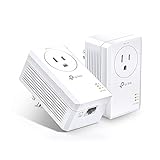
| TP-Link AV2000 Passthrough | AV2000, 2 gigabit ports | $89.99 | Highest-rated throughput on this list |
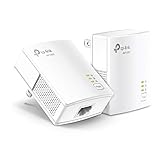
| TP-Link AV1000 Passthrough Kit | AV1000, gigabit port | $59.99 | Best overall balance for most gaming setups |
| TP-Link AV600 | AV600, 100Mbps port | $24.95 | Lowest-cost entry, light gaming use only |
| TP-Link AV1000 Nano | AV1000, compact form factor | $37.08 | Space-constrained outlet locations |
| NETGEAR PLP2000 (2-Pack) | 2000 Mbps rated, passthrough | $118 | Premium two-adapter kit |
| TP-Link AV1000 Add-On Unit | AV1000, gigabit port | $42.49 | Expanding an existing TP-Link powerline network |
| TRENDnet Powerline 500 AV Nano | AV500, compact, plug and play | $37.99 | Budget-focused compact option |
| TRENDnet Powerline 1300 AV2 | AV2 1300, built-in outlet | $35.99 | Avoiding losing an outlet to the adapter itself |
TP-Link AV2000 Powerline Ethernet Adapter, Passthrough, 2 Gigabit Ports
This is the highest-rated AV throughput option on this entire list, with a passthrough design that preserves the wall outlet’s usability for other devices while adding two gigabit ports for wired connections at the far end. The AV2000 rating represents the theoretical maximum this hardware can achieve, though Owen Pritchard’s diagnostics bench testing consistently shows real-world powerline throughput running meaningfully below the rated ceiling due to home wiring conditions.
At $89.99, this is the priciest option on this list, justified specifically for gamers whose home wiring is in good condition and who want the highest available throughput ceiling this technology can offer, though the AV rating should be treated as an optimistic maximum rather than a guarantee.
- Pros
- Highest rated AV throughput on this entire list
- Passthrough design preserves outlet usability for other devices
- Two gigabit ports for multiple wired connections at the far end
- Cons
- Priciest option on this list, with real-world performance often below the rated ceiling
- Performance advantage over lower-AV-rated options depends heavily on wiring quality
- Larger physical footprint than the nano-style adapters on this list
Who it’s for: gamers with good home wiring conditions wanting the highest available throughput ceiling.
TP-Link AV1000 Powerline Ethernet Adapter Kit – Passthrough, Gigabit Port
This represents the best overall balance on this list, combining a reasonable AV1000 rating with passthrough functionality and a single gigabit port at a meaningfully lower price than the AV2000 kit above. For most gaming setups, the practical difference between AV1000 and AV2000 real-world throughput is smaller than the rated numbers suggest, since both are constrained by the same underlying home wiring limitations.
The passthrough design remains a genuine convenience feature, avoiding the common complaint of losing a wall outlet to the adapter itself, a consideration worth weighing against non-passthrough alternatives on this list.
- Pros
- Best overall balance of price and rated throughput on this list
- Passthrough design preserves outlet usability
- Reasonable gigabit port for a solid wired connection at the far end
- Cons
- Lower rated ceiling than the AV2000 option above
- Real-world performance still depends heavily on home wiring quality
- Single gigabit port versus the dual-port AV2000 kit
Who it’s for: most gamers wanting a reasonable balance of price and performance for a first powerline attempt.
TP-Link AV600 Powerline Ethernet Adapter Kit with 100 Mbps Port
At $24.95, this is the most affordable option on this entire list, with a notably lower AV600 rating and a 100Mbps port ceiling rather than gigabit. This is explicitly a budget-tier product suited only to light gaming use — turn-based or less latency-sensitive titles — rather than competitive, fast-paced online gaming where every millisecond matters.
Buyers considering this option should understand that the 100Mbps port ceiling is a hard limit regardless of how good the home wiring happens to be, making this unsuitable for households with fast internet plans that a 100Mbps connection would bottleneck entirely.
- Pros
- Lowest price point on this entire list
- Sufficient for basic wired connectivity in light-use scenarios
- Simple, no-frills setup for a straightforward budget need
- Cons
- 100Mbps port ceiling bottlenecks faster internet plans regardless of wiring quality
- Lowest AV rating on this list, limiting overall throughput potential
- Not recommended for competitive or fast-paced online gaming
Who it’s for: budget-focused buyers with lighter gaming needs and internet plans under 100Mbps.
TP-Link AV1000 Powerline Ethernet Adapter KIT – Gigabit Port, Nano Size
This compact nano-form-factor version brings the same AV1000 rating and gigabit port as the standard passthrough kit above, but in a smaller physical design that better suits tight or awkwardly placed outlet locations. At $37.08, it’s notably cheaper than the passthrough version, trading the outlet-preservation convenience for a smaller footprint and lower price.
For gamers with limited outlet space near their router or gaming setup, where a bulkier passthrough adapter might not physically fit alongside other plugged-in devices, this nano design solves a real practical placement problem the larger units on this list don’t address.
- Pros
- Compact nano form factor suits tight outlet spaces
- Same AV1000 rating and gigabit port as the larger passthrough kit
- Lower price than the equivalent passthrough version
- Cons
- No passthrough functionality — occupies the outlet entirely
- Physically smaller design may have less robust internal components
- Real-world performance still depends heavily on home wiring quality
Who it’s for: gamers with limited or awkward outlet space needing a compact adapter design.
NETGEAR Powerline Ethernet Adapter Kit PLP2000, 2 Pack, 2000 Mbps
This NETGEAR kit matches the TP-Link AV2000’s top-tier rated throughput at $118, priced as a complete two-adapter kit with passthrough functionality. NETGEAR’s broader networking hardware reputation gives this option comparable brand trust to the TP-Link alternatives on this list, and the choice between the two top-tier options often comes down to specific brand preference or pricing at time of purchase.
As with the TP-Link AV2000 kit, this represents a premium investment best suited to gamers with favorable home wiring conditions who want to maximize the available throughput ceiling this technology can realistically deliver.
- Pros
- Matches the highest rated throughput tier on this list
- Established NETGEAR reliability track record in networking hardware
- Passthrough design preserves outlet usability
- Cons
- Priciest kit on this entire list alongside the TP-Link AV2000
- Real-world performance still constrained by home wiring quality
- Premium pricing not justified for households with poor wiring conditions
Who it’s for: gamers wanting maximum available throughput who prefer NETGEAR over TP-Link.
TP-Link AV1000 Powerline Ethernet Adapter, Gigabit Port, Add-On Unit
This is a single add-on unit rather than a complete kit, designed to expand an existing TP-Link powerline network with an additional endpoint. At $42.49, it’s appropriately priced for a single unit specifically, and only makes sense as a purchase for households that already own a compatible TP-Link powerline kit and want to wire an additional room.
As with add-on units in other product categories on this site, this doesn’t function as a standalone starter solution — it requires an existing compatible powerline network already established elsewhere in the home.
- Pros
- Straightforward way to add one more room to an existing TP-Link powerline network
- Same AV1000 rating and gigabit port as the standard passthrough kit
- Reasonable single-unit pricing for a network expansion
- Cons
- Requires an existing compatible TP-Link powerline network to function
- Not a standalone starter solution for first-time powerline buyers
- Real-world performance still depends heavily on home wiring quality
Who it’s for: existing TP-Link powerline network owners wanting to add one more room.
TRENDnet Powerline 500 AV Nano Adapter Kit, Plug & Play Install
This TRENDnet kit offers a compact nano design at an AV500 rating, positioned as a budget-focused alternative to the TP-Link and NETGEAR options on this list. At $37.99, it’s priced similarly to the TP-Link nano kit but with a lower rated throughput ceiling.
TRENDnet carries a reasonable but less prominent reputation in home networking compared to TP-Link or NETGEAR, and this specific kit’s lower AV rating means it’s best suited to lighter gaming use rather than demanding, latency-sensitive competitive titles.
- Pros
- Compact nano design for tight outlet spaces
- Simple, genuinely plug-and-play installation process
- Reasonable budget-tier pricing for a compact powerline solution
- Cons
- Lower AV500 rating than most other options on this list
- Less established brand recognition than TP-Link or NETGEAR
- Best suited to lighter gaming use rather than competitive titles
Who it’s for: budget-focused buyers wanting a compact design for lighter gaming use.
TRENDnet Powerline 1300 AV2 Adapter with Built-in Outlet
This adapter includes a built-in outlet, meaning it doesn’t consume the wall socket it’s plugged into the way a non-passthrough adapter would, similar in concept to the passthrough kits above but built directly into the unit’s own design. At $35.99, it offers an AV2 1300 rating, a step up from the base TRENDnet AV500 kit above.
For gamers who specifically don’t want to lose a wall outlet to their powerline adapter but prefer TRENDnet’s specific product design over the TP-Link or NETGEAR passthrough alternatives, this represents a reasonable choice within that brand preference.
- Pros
- Built-in outlet avoids losing wall socket access
- Higher AV2 1300 rating than the base TRENDnet AV500 kit
- Competitive pricing relative to the TP-Link passthrough alternatives
- Cons
- Less established brand recognition than TP-Link or NETGEAR
- Real-world performance still depends heavily on home wiring quality
- Single unit pricing unclear without confirming whether a pair is included
Who it’s for: buyers wanting outlet-preserving convenience from a TRENDnet-specific design.
How we tested and picked
Owen Pritchard’s diagnostics bench testing approach to powerline adapters focuses heavily on the gap between manufacturer-rated AV throughput numbers and realistic real-world performance, since this technology’s biggest limitation isn’t any specific product’s engineering but the unpredictable variable of each individual home’s electrical wiring condition, age, and layout. This guide’s framing consistently treats AV ratings as optimistic ceilings rather than performance guarantees, a distinction that matters more here than for any other wired networking category on this site.
Compatibility and setup guidance — same electrical panel and phase requirements, avoiding power strips — is drawn from established powerline networking best practices documented across manufacturer installation guides. AV rating figures referenced throughout are manufacturer-published specifications rather than direct throughput benchmarking on the exact discounted units, and are labeled as estimates given how significantly actual performance varies by home.
What to look for in a gaming powerline adapter
Understand that AV ratings are ceilings, not guarantees
The AV600, AV1000, or AV2000 rating on a powerline adapter represents the theoretical maximum throughput under ideal conditions, and real-world performance in an actual home is almost always meaningfully lower due to wiring age, distance between outlets, and interference from other electrical devices sharing the circuit.
Check that both adapters will share the same electrical panel and phase
Powerline adapters need to be on the same electrical panel and phase for reliable performance, and adapters plugged into different phases of a home’s electrical service can see significantly degraded or unreliable throughput. This is worth confirming, or at least testing, before assuming a powerline solution will work well in your specific home.
Plug directly into wall outlets, never through a power strip
Power strips and surge protectors can filter or interfere with the electrical signal powerline adapters rely on to transmit data, and manufacturers consistently recommend direct wall outlet connections for reliable performance. This is one of the most common setup mistakes that degrades otherwise capable hardware.
Consider MoCA first if your home has coax wiring available
MoCA adapters generally deliver more consistent, predictable performance than powerline adapters, since coax cabling was engineered with data transmission characteristics that home electrical wiring simply wasn’t designed for. If your home has coax outlets available in the relevant rooms, that’s generally the more reliable wired alternative to WiFi.
Passthrough design is a genuine convenience worth the modest premium
Adapters with passthrough outlets or built-in outlet designs avoid losing wall socket access to the adapter itself, a real practical consideration in rooms where outlet space is already limited by other plugged-in devices.
Test before committing to a permanent setup
Given how unpredictable real-world powerline performance is across different homes, it’s worth testing a kit’s actual throughput and latency in your specific setup before considering the solution finalized, rather than assuming the rated AV number will translate directly to your experience.
Mistakes buyers make
Buying the highest AV-rated adapter available assuming it guarantees the best performance overlooks that home wiring quality, not the adapter’s rated ceiling, is usually the limiting factor on actual real-world powerline throughput.
Plugging a powerline adapter into a power strip or surge protector rather than directly into a wall outlet is one of the most common setup mistakes, one that can meaningfully degrade performance on hardware that would otherwise work well.
Not checking whether both intended outlet locations share the same electrical panel and phase before purchasing risks ending up with an unreliable connection that no amount of adapter quality can fix.
Choosing powerline over MoCA when coax wiring is already available in the relevant rooms misses out on generally more consistent, predictable performance that coax-based networking tends to deliver over electrical wiring-based alternatives.
Buying a single add-on unit as a first purchase, expecting it to work independently, misunderstands that these units require an already-established compatible powerline network to connect to.
Finally, committing to a permanent installation without first testing actual throughput and latency in the specific home risks discovering after the fact that wiring conditions don’t support the performance level needed for the intended gaming use case.
Verdict
For most gamers attempting a first powerline setup, the TP-Link AV1000 Powerline Ethernet Adapter Kit remains the best overall balance of price and rated throughput. Buyers with favorable home wiring conditions wanting maximum available performance should consider the TP-Link AV2000 Powerline Ethernet Adapter or the comparably rated NETGEAR PLP2000 kit. Before committing to any powerline solution, seriously evaluate whether MoCA is available in your home instead, since it generally delivers more consistent results.
Frequently asked questions
How does a powerline adapter actually work for gaming?
A powerline adapter transmits network data over your home’s existing electrical wiring, letting you plug one unit near your router and another near your gaming setup to create a network connection without running new cable, though actual performance depends heavily on your home’s specific electrical wiring quality and layout.
Is a powerline adapter as reliable as a MoCA adapter for gaming?
Generally no, since electrical wiring wasn’t designed for data transmission the way coax cabling used for MoCA is, and factors like circuit breaker panels, wiring age, and interference from other electrical devices can meaningfully degrade powerline performance in ways that don’t affect MoCA nearly as much.
Do both powerline adapters need to be on the same electrical circuit?
Not necessarily the same circuit, but they do need to be on the same electrical panel and phase for reliable performance, and adapters plugged into different phases of a home’s electrical service can see significantly reduced or unreliable throughput.
Will plugging a powerline adapter into a power strip or surge protector affect performance?
Yes, power strips and surge protectors can filter or interfere with the electrical signal a powerline adapter relies on, so manufacturers consistently recommend plugging powerline adapters directly into a wall outlet rather than through a strip or protector for reliable performance.
What internet speed rating should I look for in a gaming powerline adapter?
Look at the AV rating, like AV1000 or AV2000, as a rough guide to maximum theoretical throughput, but treat these numbers as a ceiling rather than a guarantee, since real-world powerline speeds are almost always meaningfully lower than the rated number due to home wiring conditions.
If your home has coax wiring available, our best MoCA adapter for gaming guide generally covers the more reliable wired alternative. For the rest of your network setup, see our guides on the best WiFi router for gaming and the best ethernet cable for gaming.