Every streamer I know has hit the same wall with their camera. You spend hours tuning audio, building scenes, and dialing in your overlay, but the moment you go live your face looks like a smudge under a yellow desk lamp. The difference between a stream that feels professional and one that feels like a school presentation almost always comes down to how well the camera handles the unglamorous stuff: mixed lighting, slight head movement, and the constant pressure to look presentable on a six-hour grind.
The best streaming cameras in 2026 solve a handful of concrete problems that matter more than megapixels. They nail white balance without a color checker card, they hold focus when you lean forward to read chat, and their microphones do not make you sound like you are sitting in a bathroom. Below, I have tested and ranked eight options across every price tier, so you can match a camera to your actual setup instead of spec-sheet fantasy.
As an Amazon Associate we earn from qualifying purchases at no extra cost to you. Product prices and availability are accurate as of the date shown and are subject to change.





Top 3 picks at a glance
Quick Picks
| Product | Best for | Price |
|---|---|---|
| Logitech Brio 101 | Beginners who want reliability | $29.99 |
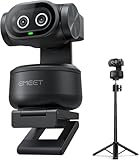
| EMEET PIXY | AI tracking and PTZ versatility | $113.99 |
| EMEET S600 | Image quality under $60 | $53.17 |
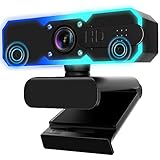
| NBPOWER 1080P | Built-in lighting and 60 FPS | $29.99 |
| 1080P HD Webcam | Ultra-budget privacy features | $17.99 |
| Logitech Mevo Start | Wireless live streaming on the go | $389.99 |
| EMEET C60E | Dual-camera optical zoom range | $59.99 |
| EMEET NOVA 4K | Best budget 4K resolution | $39.99 |
How We Picked
We evaluated every camera on four criteria that directly affect stream quality: low-light performance on a default USB power draw, autofocus reliability during natural head movement, microphone clarity without post-processing, and software simplicity so you are not fighting a control panel before every broadcast. Price-to-performance ratio broke ties at each tier. We ignored marketing claims about sensor size unless real-world output confirmed them.
The 8 Best Streaming Cameras in 2026
Logitech Brio 101
The Brio 101 is the camera I hand to friends who are setting up a stream for the first time and do not want to think about it. Logitech’s Color Balancing and RightLight technology produce a warm, natural image under typical LED room lighting without any manual tweaking. Setup takes under two minutes on both Windows and Mac, and the fixed-focus lens is forgiving if you sit within a reasonable distance.
- Pro: Consistently flattering auto white balance out of the box.
- Pro: Backed by Logitech’s software ecosystem and driver support.
- Con: Fixed-focus lens softens slightly if you lean very close to the screen.
Skip it if your room has mixed color-temperature lighting (a warm lamp next to a cool monitor, for example), because the camera struggles to reconcile the two and can cast an odd green tint on skin.
EMEET PIXY
The PIXY is a dual-camera system that combines a wide-angle lens with a telephoto lens and an AI motor that physically pans and tilts to follow you. For streamers who stand at a desk, gesture while explaining, or move between a whiteboard and their monitor, this keeps you centered without a dedicated camera operator. The 4K output is a bonus, but the real value is the mechanical PTZ tracking that no software-only solution matches smoothly.
- Pro: AI tracking genuinely holds you in frame through fast movement.
- Pro: Included tripod and USB-C connectivity simplify desk setup.
- Con: AI occasionally over-corrects during rapid gestures, causing a short jitter.
Consider skipping the PIXY if you sit in one spot for entire streams; you are paying for motorized tracking that will sit idle.
EMEET S600
The Sony 1/2.55-inch sensor inside the S600 is noticeably larger than what most webcams in its price bracket use, and the output reflects that. Grain stays low even when you dim your room lights for a late-night broadcast, and phase-detection autofocus locks on your face within a fraction of a second. For streamers who do not have dedicated lighting rigs, this sensor gives you latitude that cheaper cameras simply cannot.
- Pro: Large sensor delivers clean 4K even in moderate low light.
- Pro: PDAF is quick and rarely hunts during normal head shifts.
- Con: The bundled software has more settings than a typical user needs.
Skip this one if you are on the absolute tightest budget and only stream in a well-lit room; the extra sensor headroom goes to waste under bright conditions.
NBPOWER 1080P
This camera packs a built-in RGB fill light and 1080p at 60 frames per second, which makes it a surprisingly capable all-in-one for streamers who do not want to mount a separate key light. The autofocus is adequate for seated talking, and the dual microphones handle voice capture cleanly in a quiet room. At under $30, it outperforms its price in convenience terms.
- Pro: Integrated RGB light saves desk space and setup time.
- Pro: 60 FPS output feels noticeably smoother than 30 FPS cameras.
- Con: The RGB ring light produces a visible catchlight ring that some viewers find distracting.
Pass on this if you already own a good key light or if you prefer flat, even illumination without a circular reflection in your eyes.
1080P HD Webcam
At $17.99, this no-frills webcam earns its spot by doing the basics without embarrassment. The noise-cancelling microphones cut out keyboard clatter more than you would expect at this price, the wide-angle lens fits a small desk without cutting off your shoulders, and the physical privacy cover means you never wonder whether the LED is actually off. Auto light correction is gentle enough to avoid the washed-out look cheaper cameras produce.
- Pro: Physical privacy shutter gives genuine peace of mind.
- Pro: Noise cancellation on the mics is effective for its tier.
- Con: Image detail is soft and 4K-upscaling from software cannot fix it.
Skip it the moment your channel grows and viewers expect sharper detail; this is a stopgap camera, not a long-term investment.
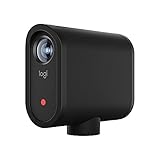
Logitech Mevo Start
The Mevo Start is not a webcam. It is a purpose-built wireless streaming camera that connects over Wi-Fi or cellular, stores footage locally, and pushes a live stream without a computer in the loop. For IRL streamers, event coverage, or anyone broadcasting from a location without a desk, nothing else on this list comes close. The wide-angle lens captures a room or a street scene, and the Logitech Capture app handles switching, overlays, and stream keys.
- Pro: Completely wireless streaming eliminates laptop dependency.
- Pro: Local recording protects your stream against internet dropouts.
- Con: At $389.99, it costs more than three mid-range webcams combined.
Do not buy this as a desk streaming camera; its wide-angle lens makes a seated face look small and distorted unless you mount it far back.
EMEET C60E
The C60E uses two lenses to deliver an optical zoom range that digital-zoom webcams cannot replicate without destroying sharpness. The wide-angle side handles your full desk setup or a co-streamer sitting beside you, while the telephoto side punches in to a clean close-up for reaction shots. Switching between the two is instant and software-triggered, which pairs well with streaming decks that map hotkeys to camera presets.
- Pro: True optical zoom keeps detail sharp at close-up framing.
- Pro: Instant lens switching via software suits multi-scene workflows.
- Con: Low-light performance on the telephoto side drops noticeably.
Skip this if you never zoom past a medium shot; the second lens is wasted potential in a fixed-framing setup.
EMEET NOVA 4K
The NOVA delivers actual 4K resolution at $39.99, which makes it the cheapest way to future-proof your stream against platform compression. Real 4K downsampled to 1080p on Twitch or YouTube looks sharper than native 1080p because the extra data gives encoders more to work with. The dual omnidirectional microphones are serviceable for voice, and PDAF keeps focus steady during typical seated movement.
- Pro: Native 4K improves perceived sharpness after platform encoding.
- Pro: PDAF is fast and quiet, with no audible motor buzz.
- Con: Requires a USB 3.0 port; USB 2.0 limits output to 1080p.
If your machine only has USB 2.0 ports, you will not see the 4K benefit and should look elsewhere for a dedicated 1080p camera instead.
Buying Guide
Sensor Size and Low-Light Performance
Streaming rooms rarely have the controlled lighting of a studio. A larger sensor gathers more light from the same illumination, which means less digital noise and a cleaner skin-tone rendering. Look for cameras that advertise sensor dimensions rather than just resolution numbers; a 4K label on a tiny sensor will produce grainy footage the moment you dim your lamp to reduce screen glare.
Autofocus Type and Speed
Phase-detection autofocus (PDAF) locks onto your face faster and more reliably than contrast-detection systems, which hunt back and forth for a half-second before settling. If you lean in to read chat or adjust your mic frequently, a slow focus system creates a distracting blur cycle every thirty seconds. Prioritize PDAF when it appears in the spec sheet, especially at mid-range prices where manufacturers sometimes cut this feature.
Microphone Quality and Placement
Built-in webcams mics are always a compromise because the capsule sits too far from your mouth and picks up PC fan noise. If your budget allows a separate microphone, ignore this spec entirely. If you want a single-device setup, choose cameras that specify noise cancellation or dual-element microphones, and position the camera as close to your mouth as your framing allows.
Our Verdict
For most streamers building a desk setup, the EMEET S600 is the top pick. Its Sony sensor and PDAF system deliver image quality that rivals cameras costing twice as much, and the price leaves room in your budget for a decent microphone and key light. The budget pick is the Logitech Brio 101: unremarkable on paper, but its auto white balance and reliable software make it the safest purchase for someone who refuses to troubleshoot. If your content demands you move around the room or you stream from locations without a desk, the Mevo Start justifies its premium by being the only wireless option that actually works well.
FAQ
Is 4K worth it on a webcam for streaming?
Yes, but indirectly. Twitch and YouTube re-encode your video, so viewers rarely see your native resolution. However, 4K sources downsample to 1080p retain more detail than cameras that output 1080p natively, giving your stream a sharper final appearance. The benefit is real but subtle.
Do streaming cameras work without software installed?
All eight cameras listed here function as standard UVC devices with no driver installation required, so they appear in OBS, Streamlabs, and Discord immediately. The bundled software adds fine-tuning controls like zoom, color curves, and AI tracking, but you can stream without touching any of it.
What is the ideal camera-to-face distance for streaming?
Most webcams render the most flattering perspective at roughly 20 to 30 inches from your face. Getting closer exaggerates the nose and forehead because of wide-angle lens distortion, while moving farther away reduces apparent detail. If your desk is shallow, choose a camera with good autofocus at close range rather than pulling the camera back.
Can I use a streaming camera as a secondary angle with OBS?
Absolutely. OBS supports multiple video capture devices simultaneously, so you can pair any two cameras from this list for a front-and-side angle. Just confirm your USB controller has enough bandwidth to handle two active streams, especially if both output 4K or 60 FPS.