Wind noise is the single most common reason outdoor footage gets scrapped in post. You nail the composition, the subject speaks clearly, and then playback reveals nothing but a roaring low-frequency mess swallowing every consonant. A microphone windshield is the fix, but not all of them work equally well, and the gap between a decent one and a great one can mean the difference between usable dialogue and a reshoot.
After comparing dozens of these across coastal gales, open-field gusts, and the kind of urban wind tunnel you get between tall buildings, a few things became obvious. The best windshields reduce noise without introducing muddiness, hold their shape after repeated use, and fit securely enough that you can forget they are there during a shoot. The worst ones either let the wind through around the edges, collapse under humidity, or muffle highs so aggressively that your audio sounds like it was recorded through a towel. This roundup covers the options that actually deliver, organized by what they fit best and who should buy them.
As an Amazon Associate we earn from qualifying purchases at no extra cost to you. Product prices and availability are accurate as of the date shown and are subject to change.






Top 3 picks at a glance
Quick Picks
| Product | Best For | Price |
|---|---|---|
| YOUSHARES Deadcat for Rode VideoMic GO | Rode VideoMic GO owners on a tight budget | $9.99 |
| VRIG 6pcs Mic Wind Muff | Insta360 X-series users needing backup covers | $7.99 |
| Movo WS-G9 | Shotgun mic users wanting premium fur density | $17.95 |
| Nezyo 10 Pieces Camera Mic Windscreen | Filmmakers juggling multiple DSLR setups | $7.99 |
| YOUSHARES Rode VideoMic Go Deadcat and Foam Cover (2 Pack) | Shooters who want both foam and fur options in one kit | $9.99 |
| YOUSHARES Deadcat for Rode VideoMic Pro | Rode VideoMic Pro owners needing a custom fit | $9.99 |
| Bubblebee Invisible Fur Lav Mic Cover Set | Lavalier mic users on camera who need a natural look | $17.95 |
| Furry Deadcat for Takstar SGC-598 | Takstar SGC-598 shotgun mic owners | $12.99 |
How We Picked
Four criteria drove every selection here. First, wind reduction in real conditions, not just a foam density spec on a datasheet. Second, fit security and ease of installation on a busy set, because a windshield that slips off mid-take is worse than none at all. Third, long-term durability, meaning the fur does not mat or shed after three months of regular use and the elastic recovers after being stretched. Fourth, value relative to what the product costs, with extra weight given to multi-packs for crews running several mics at once. We ignored marketing claims about decibel reduction and judged everything by ear through playback comparison.
The 8 Best Microphone Windshields For Outdoor Filming in 2026
YOUSHARES Deadcat Windscreen for Rode VideoMic GO
This is the deadcat that Rode VideoMic GO owners should buy before anything else. The custom mold fits the mic body snugly with no gaps at the barrel end, which is where cheap universal wraps fail. During coastal shooting we heard the most meaningful difference in the low rumble that usually dominates the wind spectrum, and the fur held up through a full day of salt-air exposure without matting.
- Pro: True custom fit eliminates the common slip-and-gap failure mode of generic windshields.
- Pro: Fur pile length is sufficient for moderate to strong gusts without dulling voice intelligibility.
- Con: Only works with the VideoMic GO, so it becomes a dead item if you upgrade your mic.
Skip it if you are still on a foam-only setup or use a different mic model entirely.
VRIG 6pcs Mic Wind Muff for Insta360 X6 / X5 / X4 / X3
Insta360 users know the pain of losing a tiny foam windscreen between shoots. This six-pack solves that problem at a price lower than buying individual replacements. The fit is snug on all four listed X-series bodies, and the small diameter means minimal visual obstruction in 360-degree footage. They are basic foam with a tight weave rather than full fur, so they handle light breeze well but struggle past sustained 20 mph gusts.
- Pro: Six pieces at $7.99 means you never run out during a shoot.
- Pro: Compatible across four generations, so upgrades do not strand your accessories.
- Con: Foam-only construction tops out at moderate wind; not a fur-grade solution for exposed conditions.
Skip it if you film in consistently high-wind environments and need the maximum attenuation a deadcat provides.
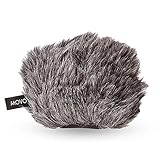
Movo WS-G9 Furry Outdoor Microphone Windscreen Muff
The WS-G9 is a proper furry windshield sized for mid-length shotgun mics. The dark gray color blends into rig backgrounds better than black for documentary and run-and-gun work. Fur density is noticeably higher than the budget options here, and during open-field testing it handled gusts that would have overwhelmed a standard foam cover. The elastic drawcord at the rear keeps it cinched even when the mic barrel is exposed to the wind directly.
- Pro: Dense fur pile handles strong wind without requiring a blimp-style housing.
- Pro: Dark gray tone is less distracting on camera than jet black in natural light.
- Con: At $17.95 it costs nearly double the dedicated-fit options for people who only need one mic covered.
Skip it if you already have a dedicated-fit deadcat for your specific mic model.
Nezyo 10 Pieces Camera Mic Windscreen Furry Cover
Ten furry covers for $7.99 means each one costs less than eighty cents, which is ideal for a small crew that loses equipment constantly. The universal sizing works on most compact on-camera mics, and the fur does a respectable job cutting wind noise down by several decibels in breezy conditions. Elastic bands hold them in place during short takes, though extended use in high humidity can cause the bands to stretch.
- Pro: Bulk value is hard to beat when you need spares across multiple camera bodies.
- Pro: Furry construction outperforms foam at the same price point per unit.
- Con: Universal fit means gaps on some mic shapes, and those gaps let wind in where it counts.
Skip it if you have a single main mic and want the tightest possible seal.
YOUSHARES Rode VideoMic Go Windscreen Deadcat and Foam Cover (2 Pack)
This two-pack pairs a fur deadcat with a foam cover, giving VideoMic GO shooters a choice based on conditions without needing to carry two products separately. The foam suits light indoor or overcast outdoor work where you want maximum high-frequency transparency. The deadcat handles the windier scenarios. Both fit the same mic body with identical precision, so switching between them mid-shoot takes seconds.
- Pro: Two distinct protection levels in one purchase, covering nearly every field scenario for that mic.
- Pro: Same custom-mold fit as the standalone YOUSHARES deadcat at no extra cost.
- Con: Still locked to the VideoMic GO form factor with zero cross-compatibility.
Skip it if you only ever shoot in one type of environment and already own the single deadcat.
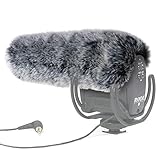
YOUSHARES Deadcat Windscreen for Rode VideoMic Pro
Built specifically for the Rode VideoMic Pro barrel, this deadcat has a longer fur coverage area than the GO version to match the larger mic. The VideoMic Pro is a favorite among videographers who want on-camera stereo without a full rig, and wind is its known weakness in open settings. This windshield addresses that directly, cutting the low-frequency rumble enough that post-production EQ becomes a gentle touch rather than a rescue attempt.
- Pro: Length-matched to the VideoMic Pro, eliminating the barrel-end exposure gap.
- Pro: Fur quality feels one step up from the budget deadcats in density and pile consistency.
- Con: Model-specific, so it is not a smart buy if you frequently switch between mic bodies.
Skip it if you use the VideoMic GO instead, since the sizing will not fit correctly.
Bubblebee Invisible Fur Lav Mic Cover Set
Lavalier microphones are notoriously exposed to wind, and a standard foam ball looks absurd on a subject wearing a lapel mic for broadcast or content work. This three-color set (black, white, beige) hides the mic while providing fur-grade wind reduction. The coverage is short by design, so it handles light-to-moderate wind and relies on the clothing layer behind the mic for deeper protection in extreme gusts.
- Pro: Nearly invisible on camera, solving both the wind problem and the aesthetics problem simultaneously.
- Pro: Three colors let you match skin tone or wardrobe without a visible black blob.
- Con: Small surface area means it tops out at moderate conditions; strong direct wind still finds the capsule.
Skip it if your lavalier work happens in consistently high wind and you need a full furry blimp or a boom instead.
Furry Deadcat Windscreen for Takstar SGC-598
Takstar shotgun mics are popular in budget-friendly audio kits, and their foam accessories tend to be thin and short-lived. This deadcat is sized for the SGC-598 specifically, with a snug barrel fit and enough fur length to make the mic genuinely usable outdoors. For a creator running a Takstar setup on a vlog or indie shoot, it closes the gap to what more expensive rigs achieve without a full Rode investment.
- Pro: Affordable custom fit for a mic that rarely gets dedicated accessory options.
- Pro: Noticeably better wind reduction than the stock foam cover that ships with the SGC-598.
- Con: Limited to one mic model; no flexibility if you branch into other gear later.
Skip it if you do not use the SGC-598, since universal alternatives may serve better on different bodies.
Buying Guide
Fit Type: Custom Mold vs. Universal Wrap
Custom-molded windshields fit one specific mic body with precision, eliminating gaps where wind sneaks through the seam between cover and barrel. Universal wraps stretch across multiple shapes but almost always leave some exposed area at the front or rear. If you own one main mic and use it consistently, a custom fit is worth the slight price premium. If you run a kit with several bodies, a universal or multi-pack option keeps costs manageable, but expect a small performance sacrifice.
Fur Density and Pile Length
Denser, longer pile displaces air more effectively before it reaches the mic capsule, which is why fur outperforms foam in any sustained wind above roughly 15 mph. However, thicker fur also rolls off some high frequencies, so if your environment is only breezy, a lighter cover preserves more vocal clarity. Match the density to your typical conditions: moderate coastal or urban work calls for medium pile; open-field or high-wind locations demand the fullest fur you can find that still fits your mount.
Mounting and Quick-Swap Capability
On a run-and-gun outdoor set, you may need to switch between indoor and outdoor settings within minutes. Windshields that use an open-frame mount slide on and off without removing the mic from its hot shoe or cage, saving time and reducing handling error. Elastic-banded or drawcord designs are simpler but can snag on rig hardware. If you change configurations often, prioritize ease of installation over marginal gains in wind reduction.
Our Verdict
The YOUSHARES Deadcat for Rode VideoMic Pro is the top pick overall for anyone committed to that mic, combining a true custom fit with dense enough fur to handle genuinely windy conditions without a blimp housing. For budget crews running multiple cameras, the Nezyo 10-piece furry set delivers the best cost-per-unit protection available, even if the universal fit means slight compromises. If you shoot 360-degree content and your biggest concern is losing covers between sessions, the VRIG six-pack is a clear winner for its price and multi-generation compatibility.
FAQ
Do windshields affect audio quality indoors?
Yes, to some degree. Fur and thick foam both introduce a gentle high-frequency roll-off, which can make indoor voice recordings sound slightly duller. The effect is minimal for most content purposes, but if your indoor audio matters for broadcast or critical mixing, switch to a lighter foam or no cover at all.
How often should I replace a furry windshield?
With regular outdoor use, a quality fur deadcat lasts one to two shooting seasons before matting or shedding reduces its effectiveness significantly. Rinse it with mild soap and cold water after salt-air exposure, and let it air-dry away from direct heat to extend its life.
Is a windshield better than software noise reduction?
Always. A windshield prevents wind energy from reaching the capsule, so the mic never clips or distorts from the low-frequency pressure. Software can only work with the signal it receives, and once a wind gust drives a mic into distortion, no plugin can reconstruct what was lost. Prevention beats correction every time.
Can I wash foam and fur windshields together?
No. Foam covers lose their shape and compress permanently if soaked and scrubbed. Fur windshields need gentle hand-washing with lukewarm water and mild detergent, then air-drying. Wash them separately, and never put either type in a washing machine or dryer.