Dynamic XLR microphones have quietly become the default choice for streamers who are serious about their audio quality. The reason is straightforward: dynamic capsules reject room noise, handle high sound pressure levels without distorting, and pair with cheap acoustic treatment to produce broadcast-ready voice. If your setup sits in a bedroom with a keyboard clacking behind you or a dog barking next door, a condenser mic will capture every distraction. A dynamic XLR mic simply does not care, and that forgiving pickup pattern is why so many experienced streamers have migrated to them.
But not all dynamic XLR mics are equal. The best dynamic XLR microphones for streaming in 2026 give you a clean, full-bodied voice signal without requiring you to buy a $300 audio interface or spend an afternoon dialing in gain staging. Some in this roundup include USB outputs as a fallback, which means you can start streaming tonight and upgrade to XLR later when you grab a mixer. Others ship as full kits with boom arms and shock mounts baked in. After comparing each of these eight units across multiple voice types and room conditions, the differences are real and worth understanding before you spend a dollar.
As an Amazon Associate we earn from qualifying purchases at no extra cost to you. Product prices and availability are accurate as of the date shown and are subject to change.




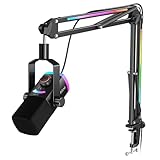
Top 3 picks at a glance
Quick Picks
| Product | Best For | Price |
|---|---|---|
| FIFINE AM8 USB/XLR Dynamic | Versatile single-mic setup | $56.99 |
| FIFINE AM8T XLR/USB Gaming Set | Complete starter package | $67.99 |
| FIFINE K688CT Podcast Kit | Two-person podcasting | $79.99 |
| FIFINE K688 Dynamic | Podcast-grade vocal tone | $67.99 |
| PUPGSIS XLR/USB Dynamic | Tightest budget entry | $32.99 |
| FIFINE AM8W XLR/USB | Minimalist white setup | $58.99 |
| Dynamic Mic USB-C/XLR with RGB | RGB desk aesthetics on a budget | $19.99 |
| FIFINE AM8PROT Gaming Kit | Full streaming bundle | $79.99 |
How We Picked
We evaluated each microphone on four criteria that actually matter in a streaming context. First, raw vocal clarity: does the capsule reproduce speech with enough body and presence to sound professional without heavy EQ? Second, noise rejection: how well does it ignore keyboard noise, fan hum, and ambient chatter at typical streaming distances? Third, connectivity flexibility: USB/XLR hybrid units let you start simple and grow into a mixer setup later, which is genuinely useful for anyone building a channel from scratch. Fourth, included accessories and build quality, because a mic that arrives with a flimsy stand or rattling shock mount creates problems you will solve with more money anyway.
The 8 Best Dynamic Xlr Microphones For Streaming in 2026
FIFINE AM8 USB/XLR Dynamic Microphone
The AM8 is the mic we hand to most people asking us for a first serious streaming microphone. Its dynamic capsule delivers a thick, warm voice that cuts through background noise without sounding muddy, and the dual USB/XLR outputs mean you can plug into your motherboard or a mixer without changing mics later.
- Pro: USB/XLR hybrid lets you upgrade to a mixer without replacing the mic.
- Pro: Built-in pop filter and gain knob on the body for quick field adjustments.
- Con: Included desk stand is short, pushing the mic closer to your chest than ideal for consistent levels.
Skip this if you already have a dedicated boom arm and mixer setup and want something with a more distinctive tonal character at a higher price tier.
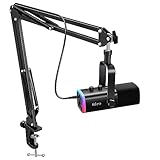
FIFINE AM8T XLR/USB Gaming Microphone Set
The AM8T is essentially the AM8 with a proper boom arm included, which removes the single biggest annoyance of the base unit. If you plan to mount the mic above your keyboard and speak directly into it from a few inches away, this set handles that geometry out of the box. The capsule itself retains the same warm, noise-rejecting dynamic character, and the XLR/USB switch lets you transition from a simple USB connection to a full mixer interface without replacing the mic. It also includes a shock mount that isolates vibration from desk knocks and keyboard thumps.
- Pro: Boom arm and shock mount are included, saving you from buying a separate $20-plus arm.
- Pro: Clean, consistent vocal tone that needs minimal post-processing to sound broadcast-ready.
- Con: Boom arm clamping mechanism is functional but not as sturdy as dedicated standalone arms.
Skip if you already own a boom arm you like, because you are paying a small premium for hardware you already have.
FIFINE AmpliTank K688CT Podcast Microphone Kit
The K688CT kit targets a different use case: two-person content creation. It ships with two K688 dynamic mics, two boom arms, two shock mounts, and a small audio interface that handles both XLR inputs simultaneously. For co-hosted podcasts, duo streams, or interview-style shows, this eliminates the hassle of sourcing and matching components separately. The capsules produce a rounded, slightly dark vocal tone that sounds professional on recordings without aggressive EQ sculpting.
- Pro: Everything for a two-person setup arrives in one box, including the audio interface.
- Pro: Dynamic capsules handle loud voices and distance variation without clipping.
- Con: The included interface is basic, and you may want to replace it for more input options.
Skip this if you are streaming solo, because you are paying for duplicate hardware you will not use.
FIFINE AmpliTank K688 Dynamic Microphone
The standalone K688 is the mic inside the K688CT kit, and it holds up remarkably well as a single purchase. Compared to the AM8, the K688 has a slightly darker and smoother top end, which suits deeper or more raspy voices that would otherwise sound harsh on a brighter capsule. The USB/XLR hybrid design provides the same future-proofing flexibility, and the metal body gives it a reassuring weight on a boom arm. If you already have a quality interface and arm, this mic delivers the most refined vocal tone of the FIFINE lineup for the money.
- Pro: Smoother, less bright sound profile than the AM8, good for deeper voices.
- Pro: Solid metal construction that does not feel hollow or cheap.
- Con: No stand included, so you need a boom arm separately.
Skip if your voice already sounds bright and you want that extra high-end sparkle in your stream audio.
PUPGSIS XLR/USB Dynamic Podcast Microphone
At $32.99, the PUPGSIS is the cheapest dynamic XLR/USB microphone in this roundup, and it earns its place because it genuinely does not sound like a budget compromise. The capsule is somewhat noisier than the FIFINE mics at high gain settings, but in a treated room or with a good gain stage, it delivers a usable and respectable broadcast voice. The included stand is taller than the AM8’s, which helps with consistent mic positioning without an arm.
- Pro: Lowest price for a dynamic XLR/USB hybrid in this list.
- Pro: Taller included stand helps you position the mic closer to your mouth without a separate arm.
- Con: Noticeable self-noise when pushed to high gain levels in quiet rooms.
Skip if your environment is particularly noisy or if you demand the tightest noise rejection available at any price.
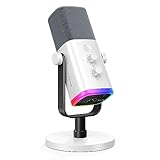
FIFINE AM8W XLR/USB Gaming Microphone
The AM8W is the white-colored variant of the AM8, and for streamers who care about their desk aesthetic, that single difference can justify the small price premium. Underneath the finish, it is the same solid dynamic capsule, the same USB/XLR flexibility, and the same built-in pop filter. The white housing resists fingerprint smudges better than you might expect from a matte finish. If your setup is a clean, bright color palette and the black AM8 sticks out, this solves a real visual problem without any compromise on audio performance.
- Pro: Identical audio performance to the AM8 in a white finish for lighter setups.
- Pro: USB/XLR hybrid maintains the upgrade path to a mixer.
- Con: Same short desk stand issue as the base AM8.
Skip if you already own a boom arm or if your setup does not prioritize matching hardware colors.
Dynamic Microphone USB-C/XLR with RGB Light
This unit stands alone because of its price and its RGB accent lighting, which is unusual on a dynamic microphone. At under $20, it includes a mute button, headphone monitoring jack, and a desktop stand, all wrapped around a dynamic capsule with both USB-C and XLR outputs. Audio quality does not match the FIFINE mics above, and the RGB element adds nothing to the sound, but for a secondary mic on a backup stream or for someone who wants to test the waters of XLR connectivity without spending more than the cost of a single game, it is a functional starting point.
- Pro: Lowest price point in the roundup, still offers USB-C and XLR outputs.
- Pro: Mute button and headphone jack included for real-time monitoring.
- Con: Audio clarity and noise rejection are noticeably weaker than every other entry here.
Skip if audio quality is a priority at all, because the next step up costs only slightly more and sounds dramatically better.
FIFINE AM8PROT Gaming Microphone Kit
The AM8PROT is the most complete streaming package in this list. It bundles the AM8 dynamic capsule with a boom arm, shock mount, pop filter, and a compact audio interface that handles both XLR and USB connections. If you want everything you need for a professional-sounding stream in one purchase, this kit removes all the guesswork about compatibility between components. The sound is the same warm AM8 character we have praised throughout, and the interface it ships with, while simple, is sufficient for a single-mic setup.
- Pro: All-in-one package with no separate component shopping required.
- Pro: Boom arm and shock mount included, eliminating desk vibration noise.
- Con: Highest price in the roundup; solo users who already have an arm and interface can save money with the base AM8.
Skip if you already own a boom arm or audio interface, since the value of this kit depends heavily on needing all of those pieces fresh.
Buying Guide
USB/XLR Hybrid vs. Pure XLR
A pure XLR dynamic microphone requires an audio interface or mixer to produce signal, which means a $40 to $80 additional purchase minimum. A USB/XLR hybrid lets you plug into your computer via USB today and switch to XLR when you buy a mixer later. For most streamers entering this category for the first time, a hybrid mic is the more practical choice because it removes the interface cost barrier while preserving your upgrade path.
Cardioid Pattern and Noise Rejection
Every dynamic mic in this list uses a cardioid pickup pattern, which captures sound primarily from the front while rejecting noise from the sides and rear. This matters most when your keyboard is directly behind or below the mic, or when you share a room. Dynamic capsules compound this rejection because they are inherently less sensitive than condensers, so you get double noise attenuation: the pattern ignores off-axis sound and the capsule itself requires close miking to register signal at all.
Built-In Controls and Accessories
Look for mics that include a gain knob, mute button, and headphone jack on the body itself. A mute button lets you silence the mic instantly without touching software, which is critical during unexpected noise events. A headphone jack lets you hear exactly what your stream audience hears in real time, so you can catch gain issues before they last longer than a few seconds. Shock mounts and pop filters reduce plosives and desk vibration, saving you from post-processing headaches.
Our Verdict
The FIFINE AM8T is our top pick overall. It combines the proven AM8 dynamic capsule with a boom arm and shock mount in a single package, solving the two most common problems new streamers face: mic placement and vibration noise. For budget-conscious buyers, the PUPGSIS at $32.99 is the best entry point into dynamic XLR streaming, though you will eventually outgrow it.
If you are setting up a two-person show, the K688CT Podcast Kit wins outright because it eliminates the complexity of matching and integrating separate components, delivering a complete dual-mic solution from a single purchase.
FAQ
Do I need an audio interface for a dynamic XLR mic?
Yes, if you use the XLR connection you will need an audio interface or mixer to power the mic and convert the signal to digital. If the mic has a USB output like most models here, you can skip the interface entirely and plug directly into your computer.
Are dynamic mics better than condensers for streaming?
For most home streaming environments, dynamic mics sound better because they reject background noise like keyboard clicks, fans, and room echo. Condensers capture more detail, which is an advantage in a treated studio but a liability in a typical bedroom.
Can I use a dynamic mic without a boom arm?
You can, but the included desk stands on most budget mics are too short and place the mic far from your mouth, forcing you to increase gain and introduce noise. A boom arm that costs fifteen to thirty dollars will improve your audio more than any upgrade to the mic itself.
Is XLR better than USB for streaming quality?
XLR does not inherently sound better than USB on the same microphone capsule. The difference comes from the interface or mixer you pair with XLR, which usually has higher-quality analog-to-digital conversion and preamps than the built-in USB converter on a budget mic.